Introduction: How Do You Know If Your Child Has Autism?
Every child develops at their own pace. However, if your child is not speaking as expected, does not respond consistently to their name, avoids social interaction, or shows repetitive behaviors, you may wonder whether these are signs of autism.
Autism spectrum disorder (ASD) is a neurodevelopmental condition that affects social communication, interaction, behaviour, and patterns of interests. Early recognition and appropriate intervention can help children develop communication, social, learning, and everyday living skills.
For parents in Nepal, finding the right professional for an autism assessment can sometimes be confusing. This guide explains when to seek an autism diagnosis, which specialists can help, where to look for services in Nepal, and what to expect during the assessment process.
1. What Are the Early Signs of Autism in Children?
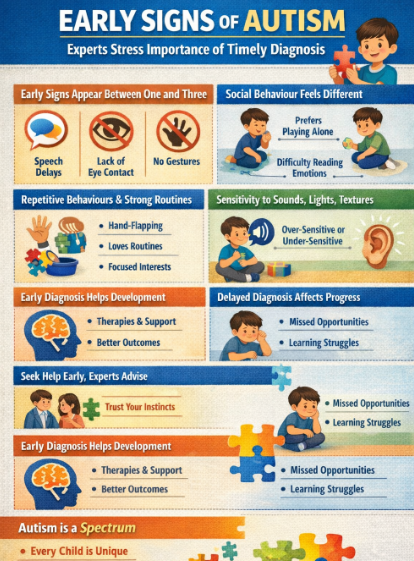
Autism signs can appear during the first few years of life. Some children show noticeable differences early, while others become more apparent as social and communication demands increase.
Social communication signs
Your child may:
Not consistently respond to their name by around 9–12 months.
Have limited eye contact or reduced shared attention.
Rarely point to show you something interesting.
Have difficulty sharing enjoyment or engaging in back-and-forth interaction.
Use fewer gestures, such as waving goodbye or pointing.
Have delayed speech or difficulty using language for communication.
Behavioural signs
Your child may:
Repeat movements such as hand flapping or rocking.
Line up toys or play with objects in repetitive ways.
Become very distressed by changes in routine.
Have unusually intense interests.
Show strong reactions to sounds, textures, lights, or certain foods.
Important: No single sign confirms autism. Some children without autism show one or more of these behaviors. A professional assessment considers the child’s overall developmental pattern and functioning.
2. At What Age Can Autism Be Diagnosed?
Autism can sometimes be identified reliably by around 18–24 months, although some children are diagnosed later.
Age
Signs that may need assessment
6–12 months
Limited social engagement, reduced gestures or shared attention
12–18 months
Not pointing to share interest, limited response to name, few communicative gestures
18–24 months
Delayed language, limited pretend play, reduced social reciprocity
2–3 years
Persistent social communication differences, repetitive behaviours, or restricted interests
4 years and older
Social difficulties, inflexible behaviour, communication differences, or learning concerns
These are examples, not a diagnostic checklist. Development varies, and concerns can justify assessment at any age.
Do not wait until your child reaches three or four years of age if you have concerns. Early assessment can help identify the child’s needs and guide intervention.
If your child loses previously acquired words, social skills, or other developmental abilities, seek prompt medical evaluation.
3. Where to Get an Autism Diagnosis in Nepal
Parents looking for an autism diagnosis in Nepal should seek a service that can assess both autism-related features and the child’s overall development.
A. Child neurologist or developmental paediatrician
A child neurologist or developmental paediatrician can evaluate developmental delays, communication concerns, unusual behaviours, seizures, and other neurological or developmental conditions.
The assessment may include:
A detailed developmental and medical history.
Questions about social communication and repetitive behaviours.
Review of language, play, learning, and adaptive skills.
A neurological examination when indicated.
Referral for speech-language, hearing, psychological, or occupational assessments as needed.
Not every child needs laboratory investigations, MRI, EEG, genetic testing. These tests are considered when the history or examination suggests a specific indication.
B. Child psychologist or clinical psychologist
A suitably trained child psychologist or clinical psychologist may contribute to autism assessment using developmental history, behavioral observation, standardized tools, and assessment of cognitive or adaptive functioning.
Some children benefit from a multidisciplinary assessment involving medical and developmental specialists, psychologists, and speech-language therapists.
C. Speech and language therapist
A speech-language therapist evaluates communication, language development, and functional communication. Speech-language assessment is valuable when a child has delayed speech or difficulty communicating.
However, a speech-language assessment alone does not necessarily establish an autism diagnosis.
D. Hospitals and developmental centers in Nepal
Families can begin by contacting pediatric, child neurology, developmental pediatrics, or child mental health services at established hospitals in Kathmandu and other major cities.
Potential starting points include:
Bansbari Neuro Hospital (UDM-NINAS): Ask about pediatric developmental evaluation or child neurologist assessment.
Tribhuvan University Teaching Hospital, Maharajgunj, Kathmandu: Contact the hospital’s pediatric services to ask about developmental assessment and referral pathways.
Patan Hospital, Lalitpur: Contact pediatric services to ask about developmental concerns and appropriate specialist referrals.
Kanti Children’s Hospital, Maharajgunj, Kathmandu: Ask about pediatric developmental evaluation and available specialist services.
Other regional hospitals and child development centers: Families outside Kathmandu can ask pediatric services or local health authorities about autism assessment and referral options.
Service availability, specialist schedules, assessment tools, and waiting times can change. Contact the institution directly before visiting to confirm whether it currently offers autism diagnostic assessments.
4. Who Can Diagnose Autism in Nepal?
Autism diagnosis requires clinical expertise in child development and autism spectrum disorder.
Depending on the service and the child’s needs, assessment may be conducted by an appropriately trained child neurologist, developmental paediatrician, child psychiatrist, or clinical psychologist working within their professional scope. A multidisciplinary team can be particularly helpful when the diagnosis is complex.
A comprehensive assessment generally considers two main areas:
Social communication and interaction: Persistent differences in social-emotional reciprocity, nonverbal communication, or developing and maintaining relationships.
Restricted or repetitive patterns of behavior: Repetitive movements or speech, inflexible routines, highly focused interests, or unusual sensory responses.
The clinician also considers early developmental history, functional impact, and whether another condition better explains the child’s presentation.
Tools such as MSHAT, ADOS-2, ISAA when available and administered by appropriately trained professionals, may support assessment. No single questionnaire or test should be used as the sole basis for diagnosis.
5. What Happens During an Autism Assessment?
An autism assessment is more than checking whether a child speaks or makes eye contact.
A typical assessment may involve the following steps:
Step 1: Developmental history
The clinician asks when the child started babbling, pointing, speaking, walking, playing, and interacting with others. Parents may be asked about pregnancy, birth, family history, and any loss of skills.
Step 2: Direct observation
The clinician observes how the child communicates, shares attention, responds to others, plays, and behaves in different situations.
Step 3: Developmental and communication assessment
The team evaluates language, learning, play, adaptive functioning, and other developmental skills as appropriate.
Step 4: Hearing and other investigations
A hearing assessment is important when speech or communication is delayed. Other tests are selected according to clinical findings rather than ordered routinely for every child.
Step 5: Explanation and intervention plan
The clinician discusses the findings, explains whether the child meets diagnostic criteria, and recommends individualized support.
Parents should receive clear guidance about the child’s strengths, challenges, and next steps.
6. What Should You Do After an Autism Diagnosis?
An autism diagnosis is not the end of the journey. It is a starting point for understanding your child’s needs and arranging appropriate support.
Intervention should be individualized and based on the child’s developmental profile.
Speech and language therapy
Supports functional communication, language development, understanding, and social communication. Some children may benefit from augmentative and alternative communication (AAC).
Parent-mediated intervention
Parents can learn practical strategies to encourage joint attention, play, communication, and interaction during everyday activities.
Occupational therapy
When indicated, occupational therapy may address functional participation, daily living skills, motor coordination, and individualized sensory-related needs.
Behavioural and developmental interventions
Evidence-based developmental and behavioral approaches can support communication, learning, social engagement, and adaptive skills. Goals should be meaningful, respectful, and tailored to the child.
Educational support
Collaboration with teachers and schools can help children participate in learning, develop communication skills, and receive appropriate accommodations.
Remember: There is no single treatment that works for every autistic child. Intervention should address individual needs, and families should be cautious about treatments advertised as guaranteed cures.
7. Is Autism Treatable in Nepal?
Autism is a lifelong neurodevelopmental condition, but meaningful progress is possible with appropriate support.
In Nepal, access to trained professionals and services may differ between Kathmandu and other regions. Families can ask about local speech-language services, developmental intervention, school support, parent training, and referral options.
The aim is not to make every autistic child behave identically. It is to improve communication, participation, independence, well-being, and quality of life while respecting each child’s individuality.
8. Common Myths About Autism Diagnosis
Myth 1: A child who makes eye contact cannot have autism.
Fact: Eye contact varies. Autism assessment considers the overall pattern of social communication and behavior.
Myth 2: Every child with autism has delayed speech.
Fact: Some autistic children speak fluently but have differences in social communication, flexibility, or restricted interests.
Myth 3: Parents cause autism.
Fact: Autism is a complex neurodevelopmental condition associated with genetic and other developmental factors. It is not caused by poor parenting.
Myth 4: We should wait because boys speak late.
Fact: Speech delay deserves assessment. It can have several causes, including hearing loss, language disorder, global developmental delay, and autism.
Myth 5: A diagnosis will limit my child’s future.
Fact: A diagnosis can help families understand their child’s needs and access appropriate support. Children’s developmental trajectories and support needs vary widely.
9. When Should You See a Child Neurologist?
Consider seeking an assessment if your child:
Is not responding consistently to their name.
Is not using gestures such as pointing or waving.
Has delayed speech or difficulty communicating.
Rarely shares interests or enjoyment with others.
Shows persistent repetitive behaviours or significant difficulty with changes in routine.
Has developmental delays in several areas.
Loses previously acquired language or social skills.
You do not need to wait until all these signs are present. If you are concerned about your child’s development, discuss it with a qualified professional.
Loss of previously acquired skills warrants prompt medical evaluation, especially if accompanied by seizures, weakness, or other new neurological symptoms.
10. Autism Diagnosis in Kathmandu, Nepal: How to Prepare for Your Visit
Before your appointment, prepare the following:
Your child’s age and main developmental concerns.
Examples of communication, play, and social interaction at home.
The age at which your child reached developmental milestones.
Any history of developmental regression.
Previous hearing tests, developmental reports, or therapy records.
Short videos showing relevant behaviours, if available and appropriate.
A list of questions you would like the clinician to answer.
You can ask the specialist:
Does my child meet the criteria for autism?
Could another developmental condition explain these signs?
Does my child need hearing, language, cognitive, or other assessments?
Which interventions should we prioritize?
How can we support communication and learning at home and school?
Conclusion: Early Autism Diagnosis Can Open the Door to Support
If you suspect autism in your child, seeking professional advice early is one of the most helpful steps you can take. Autism can often be identified in the second year of life, and developmental support can begin before a formal diagnosis when concerns are identified.
For families in Nepal, the first step is to contact an appropriately trained child development specialist, child neurologist, developmental paediatrician, or other qualified professional who can guide a comprehensive assessment.
Every child has a unique developmental journey. Early recognition, family involvement, and individualized intervention can help children build skills, participate more fully in everyday life, and reach their potential.
Concerned about your child’s development? Visit drasimchildneuro.com to learn more about child neurology and developmental concerns, and contact the practice to ask about assessment availability and referral options.
This article is for educational purposes and does not replace an individualized medical assessment.
Frequently Asked Questions (FAQs)
1. What is the best age for autism diagnosis in Nepal?
Autism can sometimes be diagnosed reliably around 18–24 months. If developmental concerns appear earlier or later, seek assessment rather than waiting for a specific age.
2. Which doctor should I consult for autism in Nepal?
You can start with a child neurologist, developmental paediatrician, or appropriately trained child psychiatrist or clinical psychologist, depending on local service availability. Some children benefit from a multidisciplinary assessment.
3. Can autism be diagnosed at age two?
Yes. Many children can be diagnosed around age two when a comprehensive assessment identifies the required developmental features.
4. Does a child need an MRI or EEG to diagnose autism?
No. MRI and EEG are not routine diagnostic tests for autism. They may be recommended if there are specific neurological indications, such as seizures, unusual neurological findings, or developmental regression requiring further evaluation.
5. Can autism be diagnosed if a child speaks normally?
Yes. Fluent speech does not rule out autism. Differences in social communication, interaction, restricted interests, and repetitive behaviours may still meet diagnostic criteria.
6. Is autism therapy available in Nepal?
Speech-language therapy, developmental and behavioural interventions, occupational therapy, and educational support may be available through various providers. Services and expertise vary by location, so families should confirm current availability and practitioner qualifications.
7. Does autism mean my child will never speak or attend school?
No. Developmental outcomes vary widely. Some autistic children use spoken language fluently, some use other communication methods, and many participate in mainstream or specialized educational settings with appropriate support.
8. Should I wait if my child is only a late talker?
No. Speech delay should be assessed because it may reflect hearing difficulties, a language disorder, autism, or another developmental condition. Early evaluation helps identify the support your child needs.
Early signs of autism in children may appear during the first few years of life. Parents may notice that their child does not respond consistently to their name, has delayed speech, makes limited eye contact, or shows less interest in interacting with others. Recognizing these signs early and seeking professional evaluation can help children access appropriate support during their development.
Autism spectrum disorder (ASD) is a neurodevelopmental condition that affects social communication, interaction, behavior, and patterns of interests. Every autistic child is different. Some children show signs in infancy, while others become more noticeable as social and communication demands increase.
If you are concerned about your child’s development, you do not need to wait until your child starts school to seek advice.
What Are the Early Signs of Autism in Children?
Early signs of autism can involve communication, social interaction, play, behavior, and sensory responses. One sign alone does not necessarily mean a child has autism, but a combination of signs warrants further assessment.
1. Limited Response to Name
A child may not consistently turn around or look toward a parent when their name is called, even when there are no obvious hearing difficulties.
2. Limited Eye Contact and Social Interaction
Some children may make less eye contact, show limited social smiling, or appear less interested in sharing experiences with parents and other children. However, eye contact varies between children and should not be used alone to diagnose autism.
3. Delayed Speech and Communication
A child may start speaking later than expected, use fewer gestures, or have difficulty communicating needs. Some children speak fluently but struggle with the social use of language, such as maintaining a conversation or sharing interests.
4. Limited Gestures and Joint Attention
Watch whether your child points to show you something interesting, waves goodbye, reaches to be picked up, or looks between an object and your face to share an experience.
Difficulty with pointing to share interest or following another person’s point may be an early sign of differences in social communication.
5. Repetitive Movements or Behaviors
Some children may flap their hands, rock their bodies, spin objects, repeat words or phrases, or perform the same actions repeatedly. These behaviors can occur for different reasons, so their context and frequency matter.
6. Strong Preference for Routines
A child may become unusually distressed by small changes in daily routines, the arrangement of toys, or the usual route to a familiar place.
7. Unusual Sensory Responses
Some children may be unusually sensitive to loud sounds, bright lights, clothing textures, or certain foods. Others may seek sensory experiences, such as spinning objects, watching moving patterns, or repeatedly touching particular textures.
8. Differences in Pretend Play and Social Play
A child may show limited pretend play, such as feeding a doll or pretending a toy car is driving to a destination. Some children may prefer playing alone or find it difficult to engage in back-and-forth play with other children.
Remember that autistic children can enjoy affection, form close relationships, and develop strong interests. Autism does not look the same in every child.
Early Signs of Autism by Age
The following are developmental warning signs, not diagnostic criteria. Children develop at different rates, and concerns should be assessed in the context of the child’s overall development.
Age
Signs that may warrant evaluation
By 6 months
Limited social smiling or reduced back-and-forth facial expressions
By 9 months
Limited sharing of facial expressions, sounds, or other social responses
By 12 months
Limited gestures, such as waving; inconsistent response to name
By 16 months
No spoken words may warrant developmental assessment
By 18 months
Limited pointing to share interest, reduced joint attention, or limited social communication
By 24 months
No spontaneous two-word phrases, limited pretend play, or persistent social communication concerns
Important: These ages are useful checkpoints, not deadlines for diagnosing autism. A child may have autism even if some milestones are present. Any loss of previously acquired language, social, or other developmental skills needs prompt medical assessment.
When Should You See a Doctor for Possible Autism?
Parents should consult a pediatrician or child neurologist if they notice one or more persistent developmental concerns, especially when several signs occur together.
Seek a developmental evaluation if your child:
Does not consistently respond to their name.
Rarely points to share interest or show you something.
Has delayed speech or difficulty communicating needs.
Shows limited back-and-forth social interaction.
Repeats movements or behaviors alongside social communication differences.
Has difficulty with changes in routines or shows unusually restricted interests.
Has lost words, social engagement, or other previously acquired skills.
Do not wait for all the signs to appear. Early evaluation can clarify your child’s needs and help determine whether developmental support is appropriate.
If your child suddenly loses skills, develops new weakness, or experiences seizures or altered awareness, seek prompt medical assessment. Sudden neurological changes may require urgent care.
Can Autism Be Diagnosed Before 2 Years of Age?
Yes. Autism can sometimes be reliably identified by experienced professionals around 18–24 months, although some children are identified earlier and others later.
Diagnosis involves assessing the child’s developmental history, social communication, behavior, and restricted or repetitive patterns. There is no single blood test, brain scan, or genetic test that can independently diagnose autism.
A clinician may recommend:
A detailed developmental history and clinical assessment.
Standardized autism-specific assessment tools when appropriate. M-CHAT scoring for toddlers, Indian Scale for Assessment of Autism (ISAA) to assess the grades of autism
Hearing and speech-language evaluation.
Additional investigations when indicated by the child’s history or examination.
Autism screening tools can help identify children who need further assessment, but a screening result alone does not confirm or exclude a diagnosis.
What Should Parents Do If They Suspect Autism?
Step 1: Record Your Observations
Write down the behaviors that concern you, when they occur, and how your child communicates at home and outside. Short videos of relevant behaviors may help the clinician understand your concerns.
Step 2: Arrange a Developmental Assessment
Consult a pediatrician, developmental pediatrician, or child neurologist experienced in child development and autism. The clinician can assess whether the observed signs are consistent with autism or another developmental condition.
Step 3: Check Hearing, Speech, and Overall Development
Speech delay can have several causes, including hearing difficulties and broader developmental differences. Appropriate evaluation helps identify your child’s needs.
Step 4: Start Appropriate Support Without Unnecessary Delay
Depending on the child’s needs, support may include speech and language therapy, parent-mediated communication strategies, occupational therapy for specific functional or sensory needs, and developmental or behavioral interventions.
You do not always need to wait for a definitive autism diagnosis to begin addressing a child’s communication and developmental difficulties.
Step 5: Monitor Progress and Support the Family
Regular follow-up helps track communication, learning, behavior, sleep, feeding, and participation in everyday activities. Parents and teachers can work together to support the child’s development.
Is Autism Curable?
Autism is a neurodevelopmental condition, not an illness that can simply be cured with a medicine. However, appropriate developmental support can help children build communication, learning, daily living, and social participation skills.
Treatment should be individualized. Medicines may be considered for specific co-occurring problems, such as severe irritability, sleep difficulties, or ADHD symptoms, when clinically appropriate. No medicine currently treats the core features of autism itself.
The goal is to understand the child’s strengths and needs, improve quality of life, and support development rather than trying to make every autistic child behave in the same way.
Frequently Asked Questions About Early Signs of Autism
1. What is the first sign of autism in a child?
Early signs may include reduced social smiling, limited response to name, limited gestures, reduced joint attention, or differences in social communication. There is no single first sign that applies to every child.
2. Does delayed speech always mean autism?
No. Speech delay can occur for many reasons. Hearing difficulties, language disorders, and broader developmental delays should also be considered. A developmental assessment helps clarify the cause.
3. Can a child have autism and still make eye contact?
Yes. Some autistic children make eye contact, speak fluently, show affection, and have strong social interests. Autism is diagnosed from a broader pattern of developmental features, not one behavior.
4. Should I wait until my child is 3 years old for an autism assessment?
No. If you have concerns, seek an evaluation as early as possible. Early assessment can help identify support needs, even when a definitive diagnosis is not yet possible.
5. Who diagnoses autism in children in Nepal?
Depending on local services and the child’s needs, assessment may involve a pediatrician, developmental pediatrician, child neurologist, child psychiatrist, psychologist, speech-language therapist, or a multidisciplinary team. A qualified clinician with appropriate autism assessment experience should coordinate or contribute to the diagnostic process.
6. Does early intervention help children with autism?
Early, individualized support can improve functional communication, learning, adaptive skills, and participation in daily activities. Progress varies between children, and support should be tailored to their individual needs.
When to Consult a Child Neurologist in Nepal
If you are concerned about delayed speech, reduced social interaction, repetitive behaviors, loss of developmental skills, or other neurological and developmental symptoms, a professional assessment can help you understand the next steps.
At drasimchildneuro.com, parents can learn more about child neurology, developmental delay, autism, and when to seek professional guidance.
Book a developmental consultation with Dr. Asim Shrestha, Child Neurologist, in Nepal, if you have concerns about your child’s development. Early recognition, appropriate assessment, and individualized support can make a meaningful difference in a child’s developmental journey.
A motor tic is a fast, repetitive series of muscle movements that result in sudden and difficult to control body jolts or sounds. Tics are very common in children from the age of 5 years and it is estimated that 20% of children (1 in 5) experience motor tics at some point. The vast majority of motor tics resolve themselves over time with reassurance for the child without the need for any treatment. Tics and other conditions Tics can occur on their own. In some cases, they are also associated with anxiety, stress or panic disorders. They can be more common in children with Attention Deficit Hyperactivity Disorder (ADHD), Autism Spectrum Disorder (ASD) or Obsessive Compulsive Disorder (OCD).
What are some of the signs of tics?
blinking, wrinkling the nose or grimacing
jerking or banging the head
clicking the fingers
touching other people or things
coughing, grunting or sniffing
repeating a sound or phrase – in a small number of cases, this may be something obscene or offensive.
What makes tics worse?
Stress
Tiredness
Boredom
There can be different triggers for each child.
What helps reduce tics?
Distraction and concentrating on other activities which interest your child
Exercise
Better sleep.
How can I help my child?
Here are some suggestions of ways to help manage tics and reduce worry:
Try to ignore your child’s tic and not talk about it too much – drawing attention to it may make it worse
Reassure your child that everything’s OK and there’s no reason for them to feel embarrassed
Ensure that people having regular contact with your child are aware of your child’s tics and explain how best they can respond if one occurs
If your child is finding school difficult, talk to their teacher about ways of dealing with this. For example, it may help if they’re allowed to leave the classroom if their tics are particularly bad.
What are some co-morbidities associated with motor tics
Some co-morbidities are- ADHD, ASD, LD, OCD, Anxiety and Depression
Do Tics need treatment?
Tics are not usually serious and they do not damage the brain. They usually go away on their own. If they are mild and do not cause problems, they might disappear as quickly as they appeared. The treatment modalities are:
Most experts recommend using both medication and behavior therapy to treat ADHD. This is known as a multimodal treatment approach. There are many forms of behavior therapy, but all have a common goal— to change the child’s physical and social environments to help the child improve his behavior. Under this approach, parents, teachers, and other caregivers learn better ways to work with and relate to the child with ADHD. You will learn how to set and enforce rules, help your child understand what he needs to do, use discipline effectively, and encourage good behavior. Your child will learn better ways to control his behavior as a result. You will learn how to be more consistent. Behavior therapy has 3 basic principles.
Tips for helping your child control his behavior Keep your child on a daily schedule. Try to keep the time that your child wakes up, eats, bathes, leaves for school, and goes to sleep the same each day. Cut down on distractions. Loud music, computer games, and TV can be overstimulating to your child. Make it a rule to keep the TV or music off during mealtime and while your child is doing homework. Whenever possible, avoid taking your child to places that may be too stimulating, like busy shopping malls. Organize your house. If your child has specific and logical places to keep his schoolwork, toys, and clothes, he is less likely to lose them. Save a spot near the front door for his school backpack so he can grab it on the way out the door. Reward positive behavior. Offer kind words, hugs, or small prizes for reaching goals in a timely manner or good behavior. Praise and reward your child’s efforts to pay attention. Set small, reachable goals. Aim for slow progress rather than instant results. Be sure that your child understands that he can take small steps toward learning to control himself. Help your child stay “on task.” Use charts and checklists to track progress with homework or chores. Keep instructions brief. Offer frequent, friendly reminders. Limit choices. Help your child learn to make good decisions by giving him only 2 or 3 options at a time. Find activities at which your child can succeed. All children need to experience success to feel good about themselves. Use calm discipline. Use consequences such as time-out, removing the child from the situation or distraction. Sometimes it is best to simply ignore the behavior. Physical punishment, such as spanking or slapping, is not helpful. Discuss your child’s behavior with him when both of you are calm. Principles for behavior therapy Set specific goals. Set clear goals for your child, such as staying focused on homework for a certain time or sharing toys with friends. Provide rewards and consequences. Give your child a specified reward (positive reinforcement) every time she shows the desired behavior. Give your child a consequence (unwanted result or punishment) consistently when she fails to meet a goal. Keep using the rewards and consequences. Using the rewards and consequences consistently for a long time will shape your child’s behavior in a positive way.
Specific Behaviour Therapies are-
1.Positive Reinforcement: E.g Child completes an assignment and is permitted to play on the computer
2.Time Out: E.g Child hits sibling and, as a result, must sit for 5 minutes in the corner of the room
3.Response cost: E.g Child loses free-time privileges for not completing homework
4.Token Economy: E.g Child earns stars or points for completing assignments and loses stars for getting out of seat. The child cashes in the sum of her stars at the end of the week for a prize
Behavior therapy recognizes the limits that having ADHD puts on a child. It focuses on how the important people and places in the child’s life can adapt to encourage good behavior and discourage unwanted behavior. It is different from play therapy or other therapies that focus mainly on the child and his emotions.
How can I help my child control her behavior? As the child’s primary caregivers, parents play a major role in behavior therapy. Parent training is available to help you learn more about ADHD and specific, positive ways to respond to ADHD-type behaviors. This will help your child improve. In many cases parenting classes with other parents will be sufficient, but with more challenging children, individual work with a counselor/coach may be needed. Taking care of yourself also will help your child. Being the parent of a child with ADHD can be tiring and trying. It can test the limits of even the best parents. Parent training and support groups made up of other families who are dealing with ADHD can be a great source of help. Learn stress- management techniques to help you respond calmly to your child. Seek counseling if you feel overwhelmed or hopeless.
What is ADHD? ADHD is one of the most common neurobehavioral disorder affecting children. ADHD is a condition of the brain that makes it difficult for children to control their behavior. It affects 4% to 12% of school-aged children. About 3 times more boys than girls are diagnosed with ADHD.
What are the symptoms of ADHD? ADHD includes 3 groups of behavior symptoms: inattention, hyperactivity, and impulsivity.
Symptoms of attention-deficit hyperactivity disorder (ADHD)
People who have ADHD have difficulty organizing things, listening to instructions, remembering details, and/or controlling their behavior. This can make it difficult to get along with other people at home, at school, or at work.
A person with ADHD who has attention deficit/ difficulty paying attention will have 6 or more of the following symptoms:
Difficulty following instructions
Difficulty keeping attention on work or play activities at school, work, and home
Losing things needed for activities at school, work, and home
Appearing not to listen
Doesn’t pay close attention to details
Seems disorganized
Trouble with tasks that require planning ahead
Forgetting things
Is easily distracted
A person with ADHD who is hyperactive or impulsive will have at least 6 of the following symptoms:
Fidgety
Runs or climbs inappropriately
Can’t play quietly
Blurts out answers
Interrupts people
Can’t stay in seat
Talks too much
Is always on the go
Has trouble waiting his or her turn
Are there different types of ADHD? Not all children with ADHD have all the symptoms. They may have one or more of the symptoms mentioned above. The symptoms usually are classified as the following types of ADHD: Inattentive only – Children with this form of ADHD are not overly active. Because they do not disrupt the classroom or other activities, their symptoms may not be noticed. Among girls with ADHD, this form is most common. Hyperactive/Impulsive—Children with this type of ADHD show both hyperactive and impulsive behavior, but can pay attention. They are the least common group and are frequently younger. Combined Inattentive/Hyperactive/Impulsive—Children with this type of ADHD show a number of symptoms in all 3 dimensions. This is the most common type of ADHD.
How can I tell if my child has ADHD? Remember, it is normal for all children to show some of these symptoms from time to time. Your child may be reacting to stress at school or home. She may be bored or going through a difficult stage of life. It does not mean he/she has ADHD. Sometimes a teacher is the first to notice inattention, hyperactivity, and/or impulsivity and bring these symptoms to the parents’ attention. Perhaps questions from your pediatrician raised the issue. At routine visits, pediatricians often ask questions such as a) How is your child doing in school? b) Are there any problems with learning that you or your child’s teachers have seen? c) Is your child happy in school? d) Is your child having problems completing class work or homework? e) Are you concerned with any behavior problems in school, at home, or when your child is playing with friends? Your answers to these questions may lead to further evaluation for ADHD. If your child has shown symptoms of ADHD on a regular basis for more than 6 months, discuss this with your pediatrician.
Diagnosis It is more difficult to diagnose ADHD in children 5 years of age and younger. This is because children change very rapidly during the preschool years. It is also more difficult to diagnose ADHD once a child becomes a teenager. There is no single test for ADHD. The process requires several steps and involves gathering a lot of information from multiple sources. You, your child, your child’s school, and other caregivers should be involved in assessing your child’s behavior. Children with ADHD show signs of inattention, hyperactivity, and/or impulsivity in specific ways. (See the behaviors listed in Table 1.) Your pediatrician will look at how your child’s behavior compares to that of other children his own age, based on the information reported about your child by you, his teacher, and any other caregivers who spend time with your child, such as coaches or child care workers. To confirm a diagnosis of ADHD, symptoms -Occur in more than one setting, such as home, school, and social situations and cause some impairment -Significantly impair your child’s ability to function in some of the activities of daily life, such as schoolwork, relationships with you and his brothers and/or sisters, and his relationship with friends or in his ability to function in groups such as sports teams -Start before the child reaches 7 years of age (However, these may not be recognized as ADHD symptoms until a child is older.) -Have continued for more than 6 months -In addition to looking at your child’s behavior, your pediatrician will do a physical and neurologic examination. A full medical history will be needed to put your child’s behavior in context and screen for other conditions that may affect his behavior. Your pediatrician also will talk with your child about how he acts and feels. Your pediatrician may refer your child to a pediatric subspecialist if there are concerns in one of the following areas: >Mental retardation >Developmental disorder such as speech problems, motor problems, or a learning disability >Chronic illness being treated with a medication that may interfere with learning >Trouble seeing and/or hearing >History of abuse >Major anxiety or major depression >Severe aggression >Possible seizure disorder >Possible sleep disorder
How can parents help with the diagnosis? As a parent, you will provide crucial information about your child’s behavior and how it affects her life at home, in school, and in other social settings. Your pediatrician will want to know what symptoms your child is showing, how long the symptoms have occurred, and how the behavior affects your child and your family. You may need to fill in checklists or rating scales about your child’s behavior. In addition, sharing your family history can offer important clues about your child’s condition.
How will my child’s school be involved? For an accurate diagnosis, your pediatrician will need to get information about your child directly from your child’s classroom teacher or another school professional. Children at least 5 years of age and older spend many of their waking hours at school. Teachers provide valuable insights. Your child’s teacher may write a report or discuss the following with your pediatrician: -Your child’s behavior in the classroom -Your child’s learning patterns -How long the symptoms have been a problem -How the symptoms are affecting your child’s progress at school -Ways the classroom program is being adapted to help your child -Whether other conditions may be affecting the symptoms In addition, your pediatrician may want to see report cards and samples of your child’s schoolwork.
What causes ADHD? ADHD is one of the most studied conditions of childhood, but ADHD may be caused by a number of things. Research to date has shown -ADHD is a biological disorder. -A lower level of activity in the parts of the brain that control attention and activity level may be associated with ADHD. -ADHD frequently runs in families. Sometimes a parent is diagnosed with ADHD In very rare cases, toxins in the environment may lead to ADHD. Significant head injuries may cause ADHD in some cases. Prematurity increases the risk of developing ADHD. Prenatal exposures, such as alcohol or nicotine from smoking, increase the risk of developing ADHD. There is little evidence that ADHD is caused by: Eating too much sugar/ Food additives/ Allergies/ Immunizations
Treatment Once the diagnosis is confirmed, the outlook for most children who receive treatment for ADHD is very encouraging. There is no specific cure for ADHD, but there are many treatment options available. Each child’s treatment must be tailored to meet his individual needs. In most cases, treatment for ADHD should include A long-term management plan with — Target outcomes for behavior — Follow-up activities — Monitoring Education about ADHD Teamwork among doctors, parents, teachers, caregivers, other health care professionals, and the child Medication Behavior therapy including parent training Individual and family counseling Treatment for ADHD uses the same principles that are used to treat other chronic conditions like asthma or diabetes. Long-term planning is needed because these conditions are not cured. Families must manage them on an ongoing basis. In the case of ADHD, schools and other caregivers must also be involved in managing the condition. Educating the people involved about ADHD is a key part of treating your child. As a parent, you will need to learn about ADHD. Read about the condition and talk to people who understand it. This will help you manage the ways ADHD affects your child and your family on a day-to-day basis. It will also help your child learn to help himself.
Setting target outcomes At the beginning of treatment, your pediatrician should help you set 3 to 6 target outcomes (goals) for your child’s behavior. These target outcomes will guide the treatment plan. Your child’s target outcomes should focus on helping her function as well as possible at home, at school, and in your community. You need to identify what behaviors are most preventing your child from success. The following are examples of target outcomes: • Improved relationships with parents, siblings, teachers, and friends (eg, fewer arguments with brothers or sisters or being invited more frequently to friends’ houses or parties) • Better schoolwork (eg, completing class work or homework assignments) • More independence in self-care or homework (eg, getting ready for school in the morning without supervision) 6 • Improved self-esteem (eg, increase in feeling that she can get her work done) • Fewer disruptive behaviors The target outcomes should be Realistic, Something your child will be able to do, and behaviors that you can observe and count.
Medication For most children, stimulant medications are a safe and effective way to relieve ADHD symptoms. As glasses help people focus their eyes to see, these medications help children with ADHD focus their thoughts better and ignore distractions. This makes them more able to pay attention and control their behavior. Stimulants may be used alone or combined with behavior therapy. Studies show that about 80% of children with ADHD who are treated with stimulants improve a great deal once the right medication and dose are determined. Different types of stimulants are available, in short-acting (immediate- release), intermediate-acting, and extended-release forms. (See Table 2.) Immediate-release forms usually are taken every 4 hours, when the medication is needed. They are the cheapest of the medications. Intermediate-acting and extended-release medications usually are taken once in the morning. Children who use extended-release forms of stimulants can avoid taking medication at school or after school. It is important not to chew or crush extended-release capsules or tablets. However, extended-release capsules that are made up of beads can be opened and sprinkled on food for children who have difficulties swallowing tablets or capsules. Which medication is best for my child? It may take some time to find the best medication, dosage, and schedule for your child. Your child may need to try different types of stimulants or other medication. Some children respond to one type of stimulant but not another. The amount of medication (dosage) that your child needs also may need to be adjusted. The dosage is not based solely on his weight. Your pediatrician will vary the dosage over time to get the best results and control possible side effects. The medication schedule also may be adjusted depending on the target outcome. For example, if the goal is to get relief from symptoms mostly at school, your child may take the medication only on school days. It is important for your child to have regular medical check-ups to monitor how well the medication is working and check for possible side effects.
What side effects can stimulants cause? Side effects occur sometimes. These tend to happen early in treatment and are usually mild and short-lived, but in rare cases can be prolonged or more severe. The most common side effects include Decreased appetite/weight loss Sleep problems Social withdrawal Some less common side effects include Rebound effect (increased activity or a bad mood as the medication wears off) Transient tics Very rare side effects include Significant increase in blood pressure or heart rate Growth delay Bizarre behaviors Most side effects can be relieved by Changing the medication dosage Adjusting the schedule of medication Using a different stimulant or atomoxetine Close contact with your pediatrician is required until you find the best medication and dose for your child. After that, periodic monitoring by your doctor is important to maintain the best effects. Stimulants and atomoxetine may not be an option for children who are taking certain other medications or who have some medical conditions such as congenital heart disease.
How can my child’s school help? Your child’s school is a key partner in providing effective behavior therapy for your child. In fact, these principles work well in the classroom for most students. Classroom management techniques may include Keeping a set routine and schedule for activities Using a system of clear rewards and consequences, such as a point system or token economy Sending daily or weekly report cards or behavior charts to parents to inform them about the child’s progress Seating the child near the teacher Using small groups for activities Encouraging students to pause a moment before answering questions Keeping assignments short or breaking them into sections Close supervision with frequent, positive cues to stay on task Your child’s school should work with you and your pediatrician to develop strategies to assist your child in the classroom. It is important to remember that once diagnosed and treated, children with ADHD are more likely to achieve their goals in school. Keeping the treatment plan on track Ongoing monitoring of your child’s behavior and medications is required to find out if the treatment plan is working. Office visits, phone conversations, behavior checklists, written reports from teachers, and behavior report cards are common tools for following the child’s progress. Treatment plans for ADHD usually require long-term efforts on the part of families and schools. Medication schedules may be complex. Behavior therapies require education and patience. Sometimes it can be hard for everyone to stick with it. Your efforts play an important part in building a healthy future for your child. Ask your pediatrician to help you find ways to keep your child’s treatment plan on track. Unproven treatments You may have heard media reports or seen advertisements for “miracle cures” for ADHD. Carefully research any such claims. Consider whether the source of the information is valid. At this time, there is no scientifically proven cure for this condition. The following methods have not been proven to work in scientific studies: • Megavitamins and mineral supplements • Anti–motion-sickness medication (to treat the inner ear) • Treatment for candida yeast infection • EEG biofeedback (training to increase brain-wave activity) • Applied kinesiology (realigning bones in the skull) • Reducing sugar consumption • Optometric vision training (asserts that faulty eye movement and sensitivities cause the behavior problems) Always tell your pediatrician about any alternative therapies, supplements, or medications that your child is using. These may interact with prescribed medications and harm your child.
Will there be a cure for ADHD soon? While there are no signs of a cure at this time, research is ongoing to learn more about the role of the brain in ADHD and the best ways to treat the disorder. Additional research is looking at the long-term outcomes for people with ADHD.
Will my child outgrow ADHD? ADHD continues into adulthood in most cases. However, by developing their strengths, structuring their environments, and using medication when needed, adults with ADHD can lead very productive lives. In some careers, having a high-energy behavior pattern can be an asset.
Infantile spasms are a type of seizures that tend to affect children under the age of 2 years. In this, children have tightening and jerky movements of limbs and body. These usually occur in clusters. Clusters of spasms usually occur upon awakening but can happen at any time of the day.
What is West Syndrome?
West syndrome is a clinical condition characterised by the combination of o Infantile spasms o Abnormal EEG showing chaotic pattern called Hypsarrhythmia o Delayed development or loss of acquired milestones.
Why is it called ‘West’ Syndrome?
West Syndrome is named after the English surgeon Dr.William James West, who published the first description of infantile spasms in 1841, having witnessed the disease in his own son, James E West. He named the seizures “Salaam Tics” at the time.
How do I recognise infantile spasms?
Infantile spasms manifest in different forms. These usually consist of a brief interruption of behaviour, with lifting and extension of the arms and bending forward at the waist. This may be accompanied by a rapid and forceful drop of the head. The individual spasms last a few seconds. Spasms often occur in clusters and the child may have several of them in a row, although singles spasms are possible. After the first spasm, there is a pause and then another spasm follows. Each cluster typically lasts a few minutes. After individual spasms, children often cry. They usually occur as child wakes up from sleep.
What is the cause of infantile spasms?
Almost any brain abnormality or injury to the brain has the potential to cause infantile spasms. Examples include brain malformations, brain infections, problems at birth and neonatal period such as delayed cry leading to lack of oxygen or low sugar levels. About one-tenth of children with infantile spasms may not have an identifiable cause despite detailed evaluation.
What is the outcome of West syndrome?
The outcome of West syndrome is highly variable; however, it is generally difficult to treat and commonly associated with developmental delay and future epilepsy. Early diagnosis and treatment of West syndrome helps in better seizure control and improved developmental outcome.
How is West Syndrome diagnosed?
The main modality of diagnosis of West Syndrome is an electroencephalogram (EEG), on which a chaotic pattern of brain waves called as hypsarrhythmia is the characteristic abnormality noted in West Syndrome. Apart from this, other investigations like MRI of the brain are done to find out the underlying cause.
How is West Syndrome treated?
A number of treatment modalities are available. The most effective drug therapies include ACTH and steroids and a drug called vigabatrin. Other anti-seizure medications are also used, though these are less effective. These include valproate, zonisamide, topiramate , clonazepam and clobazam. A one-week trial of pyridoxine is usually given at the beginning in all patients.
What are the side effects of steroids?
High dose steroids used for treatment of West Syndrome. Prolonged steroid therapy can have side effects like
· Irritability
· Increased appetite
· Weight gain
· High blood pressure
· High blood sugar levels
· Increased risk of infections
There are however transient and improve when steroid therapy is stopped.
What precautions need to be undertaken while the child is on steroids?
Any vaccines should be given to the child after consultation with the treating doctor. Children on high dose steroids for more than 2 weeks must not be given live vaccines like oral polio vaccine, measles, mumps, varicella vaccines until at least 1 month of stopping the steroids. These children are more prone to infections; hence parents should report to the hospital if the child has fever.
What are the side effects of other drugs?
Vigabatrin can cause visual disturbances when used for long duration. Valproate can cause affect liver and pancreas in high doses.
Is there any treatment apart from drugs?
In children who do not respond to anti-seizure or hormonal therapies, other modalities like surgery (to remove seizure-generating parts of the brain) and ketogenic diet may be tried.
What is ketogenic diet?
Ketogenic diet is a specialized very-high fat diet used in treating many types of epilepsy. It involves strict adherence to a diet plan and required monitoring by an experienced neurologist.
How long is the treatment continued?
Steroids are usually given for about 2 weeks followed by slowly tapering the dose and stopping. Vigabatrin is usually continued for 6 months. Other anti-seizure medications are usually continued for a couple of years till seizure control is attained.