
Introduction
Seeing your child have a seizure can be frightening. A child may suddenly become unresponsive, stiffen, jerk their arms and legs, or stare blankly for a few seconds. Parents often feel helpless and are unsure what to do.
The good news is that most seizures stop on their own, and simple first-aid measures can help keep your child safe. However, some seizures require immediate emergency medical attention.
In this guide, Dr. Asim Shrestha, Child Neurologist, explains what to do during a seizure, what not to do, and when your child needs urgent medical evaluation.
What Is a Seizure in Children?
A seizure is a temporary episode caused by abnormal electrical activity in the brain. Seizures can affect movement, awareness, behavior, sensations, or consciousness.
Common types of seizures in children include:
- Generalized tonic-clonic seizures: The child loses consciousness, becomes stiff, and develops rhythmic jerking movements.
- Absence seizures: The child briefly stares into space and may not respond for a few seconds.
- Focal seizures: Symptoms may include unusual movements, staring, altered awareness, or abnormal sensations.
- Febrile seizures: Seizures associated with fever, usually occurring in young children.
Not every episode of staring, shaking, or falling is an epileptic seizure. A medical assessment helps identify the cause.
Seizure First Aid for Children: 7 Important Steps
1. Stay Calm and Start Timing the Seizure
Look at the time when the seizure begins. Most seizures last a few minutes, but a seizure lasting five minutes or longer is a medical emergency.
If possible, note what happened before, during, and after the episode.
2. Protect Your Child From Injury
- Move nearby furniture and sharp objects away.
- Protect the child’s head with something soft.
- Loosen tight clothing around the neck.
- Remove glasses if the child is wearing them.
Do not try to stop the child’s movements by holding their arms or legs.
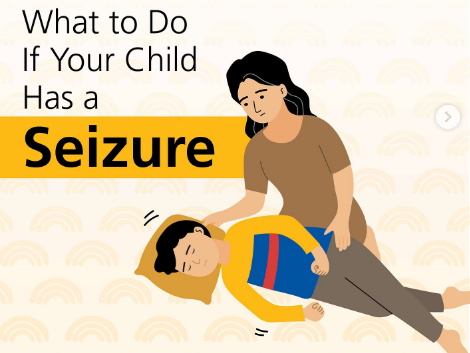
3. Turn Your Child Onto Their Side When Safe
If possible, gently position the child on their side, especially after the jerking movements stop. This helps keep the airway clear and allows saliva or vomit to drain.
Do not force the child into a position that could cause injury during strong movements.
4. Never Put Anything in the Child’s Mouth
Do not put fingers, spoons, cloth, water, medicine, or any other object into the child’s mouth.
A child cannot swallow their tongue during a seizure. Putting objects in the mouth can cause choking, dental injuries, or injury to the caregiver.
5. Do Not Give Food, Water, or Oral Medicine During a Seizure
Wait until your child is fully awake and able to swallow safely before offering anything by mouth.
If your child has a prescribed seizure-rescue medicine, use it according to the individualized emergency plan provided by their treating doctor.
6. Observe Breathing and Recovery
After the seizure, check whether your child is breathing normally. Keep them on their side if they are drowsy but breathing normally.
Some children feel sleepy, confused, or tired afterward. Stay with your child until they recover.
If the child is unresponsive and not breathing normally, call emergency services, begin CPR, and follow the emergency dispatcher’s instructions. Do not delay CPR to search for a pulse if you are not trained to check one.
7. Record Details for the Doctor
If it is safe, record a short video of the episode for the doctor. Never delay first aid or emergency assistance to record a video.
Note the duration, body movements, eye position, awareness, fever, possible triggers, and recovery time.
When Should You Seek Emergency Care for a Seizure?
Call emergency services immediately if:
- The seizure lasts 5 minutes or longer.
- Another seizure begins before the child regains consciousness.
- The child has difficulty breathing, turns blue, or does not recover normally.
- The child is seriously injured during the episode.
- The seizure occurs in water.
- The child has a first seizure, particularly if it is ongoing, prolonged, or accompanied by breathing problems or other warning signs.
- The child has a stiff neck, severe headache, persistent vomiting, or other signs of a serious illness.
- The child remains unusually unresponsive or has new weakness after the seizure.
In Nepal, call the locally available emergency ambulance service or arrange urgent transport to the nearest emergency department. Do not drive yourself if doing so would leave the child unattended.
A first seizure that has stopped and the child has fully recovered still requires prompt medical assessment. Seek emergency care for a first seizure, especially if the cause is unclear.
What About Febrile Seizures in Children?
Febrile seizures occur in some young children when they have a fever, commonly between 6 months and 5 years of age.
During a febrile seizure:
- Place the child on a safe surface.
- Protect the head and time the episode.
- Do not restrain the child or put anything in their mouth.
- Seek emergency care if the seizure lasts five minutes, breathing is abnormal, or the child does not recover normally.
A first seizure associated with fever should be medically evaluated to identify the cause of the fever and exclude serious conditions, such as meningitis, when clinically indicated.
Most simple febrile seizures do not cause brain damage and do not mean that the child has epilepsy. However, not every seizure with fever is a harmless febrile seizure.
Does Every Seizure Mean Epilepsy?
No. A seizure can occur for several reasons, including fever, low blood glucose, electrolyte disturbances, infections, head injury, or epilepsy.
Epilepsy is a neurological condition characterized by an enduring predisposition to recurrent unprovoked seizures, with certain exceptions under accepted diagnostic criteria.
A child neurologist may recommend:
- A detailed history and neurological examination
- EEG (electroencephalogram), when indicated
- Blood tests, depending on the suspected cause
- Brain MRI or other investigations when clinically indicated
Treatment depends on the seizure type, underlying cause, age of the child, and risk of recurrence. Not every child needs long-term antiseizure medication after a single seizure.
How Can Parents Prepare for Future Seizures?
If your child has a history of seizures:
- Keep prescribed medicines available and give them as directed.
- Ask your doctor whether your child needs a seizure-rescue medication and obtain a written seizure action plan.
- Inform teachers and caregivers about seizure first aid.
- Maintain adequate sleep and follow any individualized advice about seizure triggers.
- Ensure appropriate supervision around swimming pools, baths, heights, and roads.
- Attend follow-up appointments with your child’s treating clinician.
Never stop or change antiseizure medication without consulting the treating doctor.
When Should You Consult a Child Neurologist?
Arrange an assessment with a child neurologist if your child has:
- A first seizure or repeated episodes of unexplained shaking or unresponsiveness
- Recurrent staring spells or episodes of lost awareness
- Seizures despite taking prescribed medication
- Developmental regression or a change in neurological function
- Unusual movements that may represent seizures or another neurological condition
Early evaluation helps identify the cause and develop an appropriate treatment and safety plan.
Seizure Care in Nepal: When to Seek Specialist Help
Parents in Kathmandu and other parts of Nepal may have questions about childhood seizures, febrile seizures, epilepsy diagnosis, EEG, and treatment.
Dr. Asim Shrestha, Child Neurologist, provides information and specialist guidance on neurological conditions affecting children. If your child has experienced a seizure, arrange an appropriate medical evaluation. For a prolonged seizure or another emergency warning sign, seek emergency care rather than waiting for a routine appointment.
Learn more at https://drasimchildneuro.com/.
Frequently Asked Questions (FAQs)
1. What should I do first when my child has a seizure?
Stay calm, start timing the seizure, protect your child from nearby hazards, and position them on their side when safe. Never restrain their movements or put anything in their mouth. Call emergency services if the seizure lasts five minutes or longer or if breathing or recovery is abnormal.
2. How long can a seizure last before it becomes an emergency?
A convulsive seizure lasting five minutes or longer is a medical emergency. Emergency assistance is also needed if repeated seizures occur without recovery between them.
3. Should I take my child to the hospital after the first seizure?
Yes. A first seizure should receive prompt medical evaluation, even if it stops spontaneously. Call emergency services immediately if the seizure is prolonged, the child has breathing problems, remains unresponsive, or has other emergency warning signs.
4. Can a seizure cause brain damage?
Most brief seizures do not cause brain damage. Prolonged seizures, serious underlying illnesses, and breathing or oxygen problems can be dangerous and require urgent treatment.
5. Should I put a spoon in my child’s mouth during a seizure?
No. Never put a spoon, fingers, cloth, or other objects in the child’s mouth. A child cannot swallow their tongue, and objects can cause serious injuries or choking.
6. Can fever cause seizures in children?
Yes. Febrile seizures can occur in young children during a fever. A first seizure with fever needs medical assessment because other serious causes of seizures and fever must be considered.
7. Does every child with a seizure need epilepsy medication?
No. Treatment depends on the cause, seizure type, examination findings, investigations, and risk of recurrence. A doctor should decide whether medication is needed.
Conclusion
Knowing seizure first aid can help parents protect their children during a frightening episode. Remember three essential actions: protect the child, time the seizure, and seek emergency care when needed.
Never put anything in the child’s mouth or restrain their movements. A seizure lasting five minutes or longer requires emergency treatment.
For further information about childhood seizures, epilepsy, and neurological care, visit https://drasimchildneuro.com/.
Medical Disclaimer: This article is for educational purposes and does not replace an individual medical assessment. If your child is having a prolonged seizure or experiencing breathing difficulties, seek emergency medical care immediately.
Author: Dr. Asim Shrestha
Specialty: Child Neurology | Pediatric Neurology
Website: https://drasimchildneuro.com/