Attention-deficit/hyperactivity disorder (ADHD) is a neurodevelopmental condition that can affect a child’s attention, impulse control, activity level, and daily functioning.
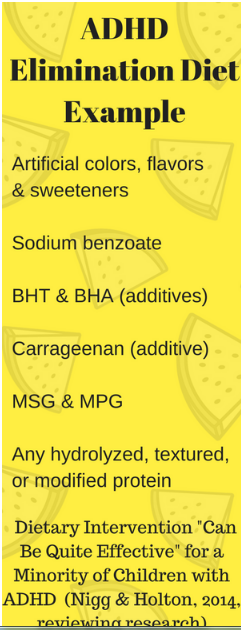
An elimination diet for ADHD in children involves temporarily removing specific foods or ingredients suspected of worsening symptoms and then carefully reintroducing them to see whether there is a consistent change in behavior.
Some children may experience changes in attention, hyperactivity, or irritability in response to particular dietary ingredients. However, food does not cause ADHD, and an elimination diet is not a proven cure for the condition.
Dietary changes may help selected children, but they do not replace evidence-based ADHD treatments.
Can an Elimination Diet Help Children With ADHD?
Research suggests that dietary interventions may benefit some children with ADHD, although the response varies considerably between individuals.
Potential areas of improvement include:
Attention and concentration
Hyperactivity and impulsivity
Irritability and emotional regulation
Sleep and general well-being, when related to specific dietary problems
The evidence for restrictive elimination diets remains limited and inconsistent. Broad elimination diets are not routinely recommended for every child with ADHD.
A balanced diet, adequate sleep, physical activity, behavioral strategies, school support, and appropriate medical treatment remain important parts of ADHD management.
Which Foods Should Be Monitored in Children With ADHD?
Rather than automatically eliminating many foods, parents should identify possible dietary triggers based on the child’s symptoms and eating habits.
1. Artificial food colours
Some studies suggest that certain artificial food colours may increase hyperactive behavior in a subset of children. The effect is generally modest, and not every child is sensitive to these ingredients.
What parents can do: Check packaged food labels and consider reducing brightly coloured processed snacks if a clear relationship with symptoms is suspected.
2. Foods containing added sugar
Sugary drinks, sweets, biscuits, and other highly sweetened foods can contribute to poor overall diet quality. However, evidence that sugar directly causes ADHD or consistently worsens its core symptoms is weak.
What parents can do: Limit sugary drinks and frequent sweets, and encourage regular balanced meals and snacks.
3. Food additives and preservatives
Some children may appear sensitive to particular food additives, but evidence does not support eliminating all preservatives from every child’s diet.
What parents can do: Keep a food and behavior diary before making substantial dietary changes.
4. Foods associated with suspected allergies or intolerances
Milk, wheat, eggs, soy, and other foods may need assessment if a child has symptoms suggesting a food allergy or intolerance.
However, these foods should not routinely be removed simply because a child has ADHD.
Important: Food allergy testing and dietary elimination should be guided by a qualified healthcare professional when an allergy is suspected.
ADHD Elimination Diet Food List
The goal is not to create a long list of forbidden foods. It is to provide a balanced diet while investigating possible individual triggers.
Food group
Foods to include or consider
Protein
Eggs, lentils, beans, chicken, fish, tofu
Whole grains
Oats, whole-wheat roti, brown rice
Fruits
Apples, bananas, oranges, seasonal fruits
Vegetables
Green leafy vegetables, carrots, pumpkin
Healthy fats
Nuts and seeds, if age-appropriate and safe
Calcium-rich foods
Milk, yogurt, or suitable fortified alternatives
For families in Nepal, practical options include dal-bhat-tarkari, seasonal fruits, eggs, beans, and other locally available nutritious foods.
If a particular food is suspected of triggering symptoms, seek professional guidance before removing it, especially if it is an important source of protein, calcium, iron, or other nutrients.
How to Try an Elimination Diet Safely
A structured approach is more useful than randomly removing foods.
Step 1: Record your child’s baseline symptoms
For one to two weeks, record your child’s attention, activity level, sleep, mood, and behavior at home and school. Note any patterns related to meals.
Step 2: Identify a specific suspected trigger
Discuss the diary with your child’s pediatrician or child neurologist. Avoid eliminating multiple food groups without a clear reason.
Step 3: Make a targeted dietary change
If appropriate, temporarily remove the suspected ingredient under professional guidance. The duration depends on the suspected trigger and the clinical plan.
Step 4: Monitor symptoms objectively
Use consistent observations and, where possible, feedback from parents and teachers. Avoid relying on a single unusually good or difficult day.
Step 5: Reintroduce the food when appropriate
Carefully reintroducing the food can help determine whether the symptoms change consistently. Do not attempt home reintroduction if a food allergy could cause a serious reaction.
Step 6: Maintain a nutritionally balanced diet
If a specific food is confirmed to be a trigger, a dietitian can help identify suitable alternatives and prevent nutritional deficiencies.
What Should Children With ADHD Eat?
There is no single ADHD diet that works for every child. A balanced dietary pattern can support general health and development.
Parents should aim to provide:
Regular meals with protein-rich foods
Whole grains and fiber-rich foods
A variety of fruits and vegetables
Adequate water
Healthy sources of fats
Age-appropriate portions and consistent meal routines
Omega-3 fatty acids have been studied in ADHD, but supplementation has shown inconsistent and generally modest benefits. Supplements should not replace established treatments.
Avoid expensive supplements, extreme restrictive diets, or claims that a particular food can cure ADHD.
Common Mistakes Parents Should Avoid
Mistake 1: Removing too many foods at once. This makes it difficult to identify the actual trigger and may lead to nutritional deficiencies.
Mistake 2: Stopping ADHD medication without medical advice. Dietary interventions should not replace prescribed medication or behavioral treatment.
Mistake 3: Assuming sugar causes ADHD. Reducing excess sugar is sensible for general health, but ADHD is a complex neurodevelopmental condition.
Mistake 4: Using unproven food sensitivity tests. Many commercially available tests are not validated for diagnosing dietary triggers of ADHD.
Mistake 5: Continuing a restrictive diet without monitoring growth. Children need sufficient calories, protein, vitamins, and minerals for healthy development.
When Should You Consult a Child Neurologist?
Consider professional assessment if your child has persistent inattention, excessive activity, impulsivity, learning difficulties, or behavioral problems affecting home and school life.
A child neurologist or qualified ADHD clinician can assess symptoms, consider other contributing conditions, discuss evidence-based treatment, and help determine whether a dietary intervention is appropriate.
In Nepal, parents should seek care from a qualified clinician rather than relying on dietary changes alone.
Frequently Asked Questions
Can an elimination diet cure ADHD?
No. There is currently no evidence that an elimination diet cures ADHD. Some children may benefit from targeted dietary changes, but responses vary.
Should every child with ADHD avoid sugar?
No. Reducing excess added sugar is reasonable for general health, but strict sugar elimination is not an established treatment for ADHD.
Should milk and wheat be removed from the ADHD diet?
Not routinely. They should generally be removed only when there is a specific clinical reason, such as a diagnosed allergy, celiac disease, or another relevant condition.
How long does an elimination diet take to work?
The time frame depends on the suspected trigger and the clinical plan. A clinician may recommend a defined trial with symptom monitoring and planned reassessment rather than an indefinite restrictive diet.
Can dietary changes replace ADHD medication?
No. Dietary interventions should be considered alongside established treatments when appropriate, not as a substitute for prescribed medication, behavioral interventions, or school support.
Final Thoughts
An elimination diet for ADHD in children may be worth considering in selected cases, but it should be targeted, time-limited when appropriate, and supervised by a qualified professional.
The most important goal is to identify genuine dietary triggers without compromising nutrition, growth, or quality of life.
For parents in Nepal: If your child has symptoms of ADHD or you suspect that certain foods worsen their behavior, consult a qualified child neurologist for individualized assessment and guidance.
Every child develops at their own pace. Some children walk early, while others take a little longer to speak or develop new skills. However, when a child consistently misses important developmental milestones, it may be a sign of developmental delay.
Recognizing developmental delay in children early is important because timely assessment and intervention can improve communication, movement, learning, social interaction, and everyday functioning.
For parents in Nepal, knowing the warning signs and understanding when to consult a specialist can make a meaningful difference.
What Is Developmental Delay in Children?
Developmental delay occurs when a child does not acquire expected skills within the usual developmental timeframe.
Development is commonly assessed across five areas:
Gross motor skills: Sitting, standing, walking, running, and jumping.
Fine motor skills: Reaching, grasping, drawing, and using objects.
Speech and language: Understanding words, speaking, and communicating needs.
Social and emotional development: Smiling, interacting, sharing attention, and playing with others.
Cognitive development: Learning, problem-solving, remembering, and understanding concepts.
A child may have difficulty in one area or several areas. Significant delays across multiple developmental domains may be described as global developmental delay in younger children.
Developmental delay is not a final explanation for every child’s difficulties. It is a reason to investigate possible causes and identify the support the child needs.
Developmental Delay in Children: Warning Signs by Age
Developmental milestones are useful guides, not rigid deadlines. A child who misses a milestone may need assessment, but a missed milestone alone does not establish a diagnosis.
1. Warning Signs at 3–6 Months
During early infancy, babies gradually develop social engagement, head control, and communication.
Watch for:
Not smiling at people by around 3 months.
Not responding to loud sounds or familiar voices.
Poor head control by around 4 months.
Not making sounds or attempting to interact with caregivers.
Not bringing hands toward the mouth or reaching for nearby objects by around 6 months.
Very limited interaction or difficulty maintaining attention to faces.
When to seek help: Consult your paediatrician if your baby is not gaining expected skills, has poor head control, or does not respond to sounds. Hearing, vision, and neurological assessment may be needed.
2. Warning Signs at 6–9 Months
Babies usually become more active and increasingly interested in people and their surroundings.
Warning signs include:
Difficulty sitting with support or poor head and trunk control.
Not laughing or making vocal sounds.
Limited reaching for toys or objects.
Little interest in interacting with caregivers.
Not turning toward sounds or familiar voices.
When to seek help: Discuss these concerns with a pediatrician, particularly if your baby has difficulty controlling their head or body or is not making progress in several developmental areas.
3. Warning Signs at 9–12 Months
By the end of the first year, many babies sit independently, babble, use gestures, and engage in simple social games.
Warning signs include:
Not sitting independently by around 9 months.
Not babbling, such as making repeated consonant sounds.
Not responding consistently to their name by around 9 months.
Not using gestures, such as waving or reaching to communicate, by around 12 months.
Not looking for objects that disappear from view.
Very limited back-and-forth interaction.
When to seek help: Ask for a developmental assessment if your baby is not sitting independently around 9 months or has limited babbling, gestures, or social responses by 12 months.
4. Warning Signs at 12–18 Months
This is an important period for language, movement, imitation, and social communication.
Warning signs include:
Not walking independently by 18 months.
Not pointing to show interest or request something by around 15 months.
Not trying to say any meaningful words by around 16 months.
Not following simple instructions with gestures or familiar context.
Limited imitation of actions.
Little interest in sharing attention or interacting with others.
When to seek help: A child who is not using meaningful words by 16 months, is not pointing to communicate, or is not walking independently by 18 months should receive an appropriate developmental assessment.
5. Warning Signs at 18–24 Months
Toddlers usually develop more language, pretend play, and independence during this period.
Warning signs include:
Fewer than approximately 50 words or no spontaneous two-word phrases by 24 months.
Not following simple one-step instructions.
Limited pretend play, such as feeding a doll.
Not combining words meaningfully by 24 months.
Limited interest in other children or shared activities.
Persistent difficulty communicating needs.
When to seek help: If your child is not using spontaneous two-word phrases by 24 months, arrange a developmental and speech-language assessment. Hearing assessment is also important when speech is delayed.
6. Warning Signs at 2–3 Years
At this age, children increasingly communicate, play, imitate, and follow everyday instructions.
Watch for:
Speech that is difficult for familiar caregivers to understand.
Difficulty combining words to express needs.
Limited pretend play or imitation.
Difficulty understanding simple questions or instructions.
Very limited interest in social interaction.
Repetitive behaviors or significant distress with changes in routine.
Difficulty using everyday objects or acquiring new skills.
These signs may occur in children with language disorders, autism, hearing difficulties, intellectual developmental disorders, or other developmental conditions.
When to seek help: Consult a developmental specialist if language, play, social communication, or everyday functioning is significantly behind expectations.
7. Warning Signs at 3–4 Years
Preschool children usually develop more complex language, imaginative play, and social skills.
Warning signs include:
Difficulty having a simple back-and-forth conversation.
Limited ability to tell others what they need or what happened.
Loss of previously acquired speech or social skills.
When to seek help: Seek assessment if communication, social interaction, learning, or daily activities are substantially delayed or if your child loses previously acquired abilities.
8. Warning Signs at 4–5 Years
Children approaching school age generally develop more complex communication, early learning, and self-care skills.
Warning signs include:
Difficulty understanding or answering simple questions.
Limited ability to describe familiar events.
Significant difficulty following simple rules or instructions.
Difficulty engaging in imaginative play or interacting with peers.
Delays in drawing, using age-appropriate tools, or managing everyday tasks.
Difficulty acquiring early learning skills compared with peers.
When to seek help: A developmental assessment can identify whether the difficulty relates to language, hearing, cognition, attention, motor skills, autism, or another condition.
Developmental Milestones: Quick Reference Table
Age
Examples of expected skills
Warning signs that need attention
6 months
Reaches for objects, makes sounds, interacts socially
Poor head control, limited sounds or interaction
9 months
Sits without support, babbles, responds to name
Cannot sit independently, little babbling
12 months
Uses gestures, babbles, plays simple social games
No gestures or babbling
15–16 months
Points to communicate, attempts meaningful words
No pointing or no meaningful words by 16 months
18 months
Walks independently, attempts several words
Not walking independently or no meaningful words
24 months
Combines words spontaneously, follows simple instructions
No spontaneous two-word phrases
3 years
Uses short sentences, engages in pretend play
Marked communication or social difficulties
4–5 years
Develops conversation, imaginative play, and self-care
Persistent difficulty communicating, learning, or participating
These are practical developmental guideposts, not diagnostic criteria. Interpret milestones in the context of the child’s overall development, medical history, and opportunities to learn.
What Causes Developmental Delay in Children?
Developmental delay can have many causes, including:
Genetic conditions: Certain chromosome abnormalities and genetic disorders- Down syndrome, Fragile X syndrome, Rett syndrome
Prematurity(37 weeks): Children born early may need adjusted milestone interpretation, especially in the first two years.
Hearing or vision impairment: These can affect communication and learning.
Neurological conditions: Cerebral palsy, epilepsy-related disorders, and other neurological conditions.
Autism spectrum disorder: Differences in social communication, interaction, and behaviour.
Nutritional or medical conditions: Some nutritional deficiencies, thyroid disorders, and other medical problems.
Environmental and psychosocial factors: Limited opportunities for interaction and learning may contribute to developmental difficulties.
Sometimes, the cause is not immediately apparent. A structured assessment helps determine which investigations, if any, are appropriate.
Is Developmental Delay the Same as Autism?
No. Developmental delay and autism are related but different concepts.
Developmental delay
Autism spectrum disorder
Describes slower acquisition of developmental skills
A specific neurodevelopmental condition
May affect one or several developmental areas
Involves persistent social communication differences and restricted or repetitive patterns of behaviour
Can result from many different causes
May occur with or without language or intellectual delay
Requires assessment to identify the child’s needs and possible cause
Requires an assessment of autism-specific diagnostic criteria (MCHAT, ISAA, ADOS-2)
A child can have both autism and developmental delay. A child with delayed speech does not automatically have autism, and a child who speaks fluently can still be autistic.
What Should You Do If You Notice Developmental Delay?
If you are concerned about your child’s development, follow these steps.
Step 1: Discuss your concerns with a doctor
Start with your paediatrician or consult an appropriately trained developmental paediatrician or child neurologist. Explain the skills your child has and has not acquired.
Step 2: Arrange a developmental assessment
Assessment may include a developmental history, physical and neurological examination, observation, and standardized developmental screening or evaluation.
Step 3: Check hearing and vision
Hearing difficulties can contribute to delayed speech. Vision problems can affect interaction, movement, and learning.
Step 4: Consider targeted investigations
Depending on the child’s history and examination, the doctor may recommend genetic testing, thyroid or other laboratory tests, neuroimaging, EEG, or additional specialist assessment. Not every child needs all these tests.
Step 5: Start appropriate intervention early
Do not delay helpful support while waiting for every investigation to be completed. Speech-language therapy, physiotherapy, occupational therapy, developmental intervention, and parent-mediated strategies may be recommended according to the child’s needs.
Why Early Intervention Matters
Early intervention helps children build skills during an important period of development.
Depending on the child’s profile, support may include:
Speech and language therapy: Communication, language comprehension, and expressive language.
Physiotherapy: Gross motor development, balance, strength, and mobility.
Occupational therapy: Fine motor skills, daily living activities, and functional participation.
Developmental and behavioural interventions: Learning, play, communication, and adaptive skills.
Parent coaching: Practical strategies to support development during daily routines.
Educational support: Individualized learning strategies and school accommodations.
There is no single intervention suitable for every child. Goals should be individualized, measurable, and reviewed regularly.
When Should You See a Child Neurologist?
Consider specialist assessment if your child has:
Delayed milestones in multiple developmental areas.
Persistent speech or language delay.
Poor head control, abnormal muscle tone, or difficulty walking.
Unusual movements or suspected seizures.
Significant developmental difficulties with possible neurological features.
Regression, meaning loss of previously acquired skills.
Developmental concerns accompanied by abnormal head growth or other neurological signs.
How Can Parents Support Development at Home?
Parents play an important role in supporting development. You can:
Talk, sing, and read to your child every day.
Respond to your child’s sounds, gestures, and attempts to communicate.
Encourage floor play, movement, and age-appropriate exploration.
Play turn-taking games and imitate your child’s actions.
Offer opportunities to play with other children when appropriate.
Follow your child’s interests and encourage small steps toward new skills.
Attend recommended therapy sessions and practise strategies at home.
Track new skills and discuss concerns with your child’s clinician.
Avoid comparing your child constantly with other children. Focus on your child’s progress and seek help when development does not seem to be progressing as expected.
Frequently Asked Questions
1. What are the first signs of developmental delay in children?
Early signs may include poor head control, limited social interaction, delayed babbling, lack of gestures, difficulty sitting or walking, and delayed speech. The signs depend on the child’s age and the developmental area affected.
2. At what age should I worry about developmental delay?
There is no single age at which every concern becomes significant. For example, not sitting independently by around 9 months, not pointing to communicate by around 15 months, no meaningful words by 16 months, and no spontaneous two-word phrases by 24 months are important reasons to seek assessment.
3. Can developmental delay be treated?
Treatment depends on the cause. Some children catch up in particular areas, while others benefit from long-term support. Early intervention can improve functional skills and participation.
4. Does speech delay always mean autism?
No. Speech delay can occur because of hearing impairment, developmental language disorder, global developmental delay, autism, and other conditions. A comprehensive assessment helps distinguish among these possibilities.
5. Which doctor should I consult for developmental delay in Nepal?
You can begin with a paediatrician or seek an appropriately trained child neurologist or developmental paediatrician. A multidisciplinary team may include psychologists, speech-language therapists, physiotherapists, and occupational therapists.
6. Does every child with developmental delay need an MRI or genetic test?
No. Investigations depend on the child’s history, physical examination, neurological findings, and pattern of delay. A clinician should select tests according to the individual child’s needs.
7. Can a child with developmental delay attend a regular school?
Many children can attend mainstream schools, sometimes with additional support or accommodations. Educational planning should be based on the child’s communication, learning, adaptive skills, and individual needs.
8. Should I wait and see if my child catches up?
If you have persistent concerns, seek assessment rather than relying only on waiting. Early evaluation can identify treatable conditions and help children access intervention sooner.
Conclusion
Developmental delay in children can affect movement, speech, learning, social interaction, or several areas at once. Recognizing warning signs by age helps parents understand when professional assessment may be needed.
If your child is missing important milestones, has persistent communication difficulties, or is losing previously acquired skills, seek medical advice promptly. Early identification, appropriate investigations, and individualized intervention can make a meaningful difference.
Concerned about your child’s development? Visit drasimchildneuro.com to learn more about child neurology and developmental concerns, and contact the practice to ask about assessment availability and referral options.
Introduction: How Do You Know If Your Child Has Autism?
Every child develops at their own pace. However, if your child is not speaking as expected, does not respond consistently to their name, avoids social interaction, or shows repetitive behaviors, you may wonder whether these are signs of autism.
Autism spectrum disorder (ASD) is a neurodevelopmental condition that affects social communication, interaction, behaviour, and patterns of interests. Early recognition and appropriate intervention can help children develop communication, social, learning, and everyday living skills.
For parents in Nepal, finding the right professional for an autism assessment can sometimes be confusing. This guide explains when to seek an autism diagnosis, which specialists can help, where to look for services in Nepal, and what to expect during the assessment process.
1. What Are the Early Signs of Autism in Children?
Autism signs can appear during the first few years of life. Some children show noticeable differences early, while others become more apparent as social and communication demands increase.
Social communication signs
Your child may:
Not consistently respond to their name by around 9–12 months.
Have limited eye contact or reduced shared attention.
Rarely point to show you something interesting.
Have difficulty sharing enjoyment or engaging in back-and-forth interaction.
Use fewer gestures, such as waving goodbye or pointing.
Have delayed speech or difficulty using language for communication.
Behavioural signs
Your child may:
Repeat movements such as hand flapping or rocking.
Line up toys or play with objects in repetitive ways.
Become very distressed by changes in routine.
Have unusually intense interests.
Show strong reactions to sounds, textures, lights, or certain foods.
Important: No single sign confirms autism. Some children without autism show one or more of these behaviors. A professional assessment considers the child’s overall developmental pattern and functioning.
2. At What Age Can Autism Be Diagnosed?
Autism can sometimes be identified reliably by around 18–24 months, although some children are diagnosed later.
Age
Signs that may need assessment
6–12 months
Limited social engagement, reduced gestures or shared attention
12–18 months
Not pointing to share interest, limited response to name, few communicative gestures
18–24 months
Delayed language, limited pretend play, reduced social reciprocity
2–3 years
Persistent social communication differences, repetitive behaviours, or restricted interests
4 years and older
Social difficulties, inflexible behaviour, communication differences, or learning concerns
These are examples, not a diagnostic checklist. Development varies, and concerns can justify assessment at any age.
Do not wait until your child reaches three or four years of age if you have concerns. Early assessment can help identify the child’s needs and guide intervention.
If your child loses previously acquired words, social skills, or other developmental abilities, seek prompt medical evaluation.
3. Where to Get an Autism Diagnosis in Nepal
Parents looking for an autism diagnosis in Nepal should seek a service that can assess both autism-related features and the child’s overall development.
A. Child neurologist or developmental paediatrician
A child neurologist or developmental paediatrician can evaluate developmental delays, communication concerns, unusual behaviours, seizures, and other neurological or developmental conditions.
The assessment may include:
A detailed developmental and medical history.
Questions about social communication and repetitive behaviours.
Review of language, play, learning, and adaptive skills.
A neurological examination when indicated.
Referral for speech-language, hearing, psychological, or occupational assessments as needed.
Not every child needs laboratory investigations, MRI, EEG, genetic testing. These tests are considered when the history or examination suggests a specific indication.
B. Child psychologist or clinical psychologist
A suitably trained child psychologist or clinical psychologist may contribute to autism assessment using developmental history, behavioral observation, standardized tools, and assessment of cognitive or adaptive functioning.
Some children benefit from a multidisciplinary assessment involving medical and developmental specialists, psychologists, and speech-language therapists.
C. Speech and language therapist
A speech-language therapist evaluates communication, language development, and functional communication. Speech-language assessment is valuable when a child has delayed speech or difficulty communicating.
However, a speech-language assessment alone does not necessarily establish an autism diagnosis.
D. Hospitals and developmental centers in Nepal
Families can begin by contacting pediatric, child neurology, developmental pediatrics, or child mental health services at established hospitals in Kathmandu and other major cities.
Potential starting points include:
Bansbari Neuro Hospital (UDM-NINAS): Ask about pediatric developmental evaluation or child neurologist assessment.
Tribhuvan University Teaching Hospital, Maharajgunj, Kathmandu: Contact the hospital’s pediatric services to ask about developmental assessment and referral pathways.
Patan Hospital, Lalitpur: Contact pediatric services to ask about developmental concerns and appropriate specialist referrals.
Kanti Children’s Hospital, Maharajgunj, Kathmandu: Ask about pediatric developmental evaluation and available specialist services.
Other regional hospitals and child development centers: Families outside Kathmandu can ask pediatric services or local health authorities about autism assessment and referral options.
Service availability, specialist schedules, assessment tools, and waiting times can change. Contact the institution directly before visiting to confirm whether it currently offers autism diagnostic assessments.
4. Who Can Diagnose Autism in Nepal?
Autism diagnosis requires clinical expertise in child development and autism spectrum disorder.
Depending on the service and the child’s needs, assessment may be conducted by an appropriately trained child neurologist, developmental paediatrician, child psychiatrist, or clinical psychologist working within their professional scope. A multidisciplinary team can be particularly helpful when the diagnosis is complex.
A comprehensive assessment generally considers two main areas:
Social communication and interaction: Persistent differences in social-emotional reciprocity, nonverbal communication, or developing and maintaining relationships.
Restricted or repetitive patterns of behavior: Repetitive movements or speech, inflexible routines, highly focused interests, or unusual sensory responses.
The clinician also considers early developmental history, functional impact, and whether another condition better explains the child’s presentation.
Tools such as MSHAT, ADOS-2, ISAA when available and administered by appropriately trained professionals, may support assessment. No single questionnaire or test should be used as the sole basis for diagnosis.
5. What Happens During an Autism Assessment?
An autism assessment is more than checking whether a child speaks or makes eye contact.
A typical assessment may involve the following steps:
Step 1: Developmental history
The clinician asks when the child started babbling, pointing, speaking, walking, playing, and interacting with others. Parents may be asked about pregnancy, birth, family history, and any loss of skills.
Step 2: Direct observation
The clinician observes how the child communicates, shares attention, responds to others, plays, and behaves in different situations.
Step 3: Developmental and communication assessment
The team evaluates language, learning, play, adaptive functioning, and other developmental skills as appropriate.
Step 4: Hearing and other investigations
A hearing assessment is important when speech or communication is delayed. Other tests are selected according to clinical findings rather than ordered routinely for every child.
Step 5: Explanation and intervention plan
The clinician discusses the findings, explains whether the child meets diagnostic criteria, and recommends individualized support.
Parents should receive clear guidance about the child’s strengths, challenges, and next steps.
6. What Should You Do After an Autism Diagnosis?
An autism diagnosis is not the end of the journey. It is a starting point for understanding your child’s needs and arranging appropriate support.
Intervention should be individualized and based on the child’s developmental profile.
Speech and language therapy
Supports functional communication, language development, understanding, and social communication. Some children may benefit from augmentative and alternative communication (AAC).
Parent-mediated intervention
Parents can learn practical strategies to encourage joint attention, play, communication, and interaction during everyday activities.
Occupational therapy
When indicated, occupational therapy may address functional participation, daily living skills, motor coordination, and individualized sensory-related needs.
Behavioural and developmental interventions
Evidence-based developmental and behavioral approaches can support communication, learning, social engagement, and adaptive skills. Goals should be meaningful, respectful, and tailored to the child.
Educational support
Collaboration with teachers and schools can help children participate in learning, develop communication skills, and receive appropriate accommodations.
Remember: There is no single treatment that works for every autistic child. Intervention should address individual needs, and families should be cautious about treatments advertised as guaranteed cures.
7. Is Autism Treatable in Nepal?
Autism is a lifelong neurodevelopmental condition, but meaningful progress is possible with appropriate support.
In Nepal, access to trained professionals and services may differ between Kathmandu and other regions. Families can ask about local speech-language services, developmental intervention, school support, parent training, and referral options.
The aim is not to make every autistic child behave identically. It is to improve communication, participation, independence, well-being, and quality of life while respecting each child’s individuality.
8. Common Myths About Autism Diagnosis
Myth 1: A child who makes eye contact cannot have autism.
Fact: Eye contact varies. Autism assessment considers the overall pattern of social communication and behavior.
Myth 2: Every child with autism has delayed speech.
Fact: Some autistic children speak fluently but have differences in social communication, flexibility, or restricted interests.
Myth 3: Parents cause autism.
Fact: Autism is a complex neurodevelopmental condition associated with genetic and other developmental factors. It is not caused by poor parenting.
Myth 4: We should wait because boys speak late.
Fact: Speech delay deserves assessment. It can have several causes, including hearing loss, language disorder, global developmental delay, and autism.
Myth 5: A diagnosis will limit my child’s future.
Fact: A diagnosis can help families understand their child’s needs and access appropriate support. Children’s developmental trajectories and support needs vary widely.
9. When Should You See a Child Neurologist?
Consider seeking an assessment if your child:
Is not responding consistently to their name.
Is not using gestures such as pointing or waving.
Has delayed speech or difficulty communicating.
Rarely shares interests or enjoyment with others.
Shows persistent repetitive behaviours or significant difficulty with changes in routine.
Has developmental delays in several areas.
Loses previously acquired language or social skills.
You do not need to wait until all these signs are present. If you are concerned about your child’s development, discuss it with a qualified professional.
Loss of previously acquired skills warrants prompt medical evaluation, especially if accompanied by seizures, weakness, or other new neurological symptoms.
10. Autism Diagnosis in Kathmandu, Nepal: How to Prepare for Your Visit
Before your appointment, prepare the following:
Your child’s age and main developmental concerns.
Examples of communication, play, and social interaction at home.
The age at which your child reached developmental milestones.
Any history of developmental regression.
Previous hearing tests, developmental reports, or therapy records.
Short videos showing relevant behaviours, if available and appropriate.
A list of questions you would like the clinician to answer.
You can ask the specialist:
Does my child meet the criteria for autism?
Could another developmental condition explain these signs?
Does my child need hearing, language, cognitive, or other assessments?
Which interventions should we prioritize?
How can we support communication and learning at home and school?
Conclusion: Early Autism Diagnosis Can Open the Door to Support
If you suspect autism in your child, seeking professional advice early is one of the most helpful steps you can take. Autism can often be identified in the second year of life, and developmental support can begin before a formal diagnosis when concerns are identified.
For families in Nepal, the first step is to contact an appropriately trained child development specialist, child neurologist, developmental paediatrician, or other qualified professional who can guide a comprehensive assessment.
Every child has a unique developmental journey. Early recognition, family involvement, and individualized intervention can help children build skills, participate more fully in everyday life, and reach their potential.
Concerned about your child’s development? Visit drasimchildneuro.com to learn more about child neurology and developmental concerns, and contact the practice to ask about assessment availability and referral options.
This article is for educational purposes and does not replace an individualized medical assessment.
Frequently Asked Questions (FAQs)
1. What is the best age for autism diagnosis in Nepal?
Autism can sometimes be diagnosed reliably around 18–24 months. If developmental concerns appear earlier or later, seek assessment rather than waiting for a specific age.
2. Which doctor should I consult for autism in Nepal?
You can start with a child neurologist, developmental paediatrician, or appropriately trained child psychiatrist or clinical psychologist, depending on local service availability. Some children benefit from a multidisciplinary assessment.
3. Can autism be diagnosed at age two?
Yes. Many children can be diagnosed around age two when a comprehensive assessment identifies the required developmental features.
4. Does a child need an MRI or EEG to diagnose autism?
No. MRI and EEG are not routine diagnostic tests for autism. They may be recommended if there are specific neurological indications, such as seizures, unusual neurological findings, or developmental regression requiring further evaluation.
5. Can autism be diagnosed if a child speaks normally?
Yes. Fluent speech does not rule out autism. Differences in social communication, interaction, restricted interests, and repetitive behaviours may still meet diagnostic criteria.
6. Is autism therapy available in Nepal?
Speech-language therapy, developmental and behavioural interventions, occupational therapy, and educational support may be available through various providers. Services and expertise vary by location, so families should confirm current availability and practitioner qualifications.
7. Does autism mean my child will never speak or attend school?
No. Developmental outcomes vary widely. Some autistic children use spoken language fluently, some use other communication methods, and many participate in mainstream or specialized educational settings with appropriate support.
8. Should I wait if my child is only a late talker?
No. Speech delay should be assessed because it may reflect hearing difficulties, a language disorder, autism, or another developmental condition. Early evaluation helps identify the support your child needs.
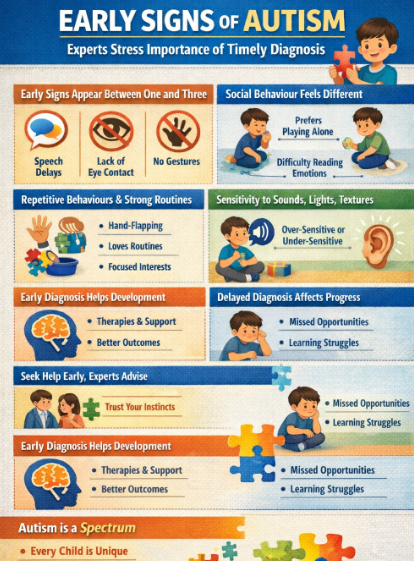
Early signs of autism in children may appear during the first few years of life. Parents may notice that their child does not respond consistently to their name, has delayed speech, makes limited eye contact, or shows less interest in interacting with others. Recognizing these signs early and seeking professional evaluation can help children access appropriate support during their development.
Autism spectrum disorder (ASD) is a neurodevelopmental condition that affects social communication, interaction, behavior, and patterns of interests. Every autistic child is different. Some children show signs in infancy, while others become more noticeable as social and communication demands increase.
If you are concerned about your child’s development, you do not need to wait until your child starts school to seek advice.
What Are the Early Signs of Autism in Children?
Early signs of autism can involve communication, social interaction, play, behavior, and sensory responses. One sign alone does not necessarily mean a child has autism, but a combination of signs warrants further assessment.
1. Limited Response to Name
A child may not consistently turn around or look toward a parent when their name is called, even when there are no obvious hearing difficulties.
2. Limited Eye Contact and Social Interaction
Some children may make less eye contact, show limited social smiling, or appear less interested in sharing experiences with parents and other children. However, eye contact varies between children and should not be used alone to diagnose autism.
3. Delayed Speech and Communication
A child may start speaking later than expected, use fewer gestures, or have difficulty communicating needs. Some children speak fluently but struggle with the social use of language, such as maintaining a conversation or sharing interests.
4. Limited Gestures and Joint Attention
Watch whether your child points to show you something interesting, waves goodbye, reaches to be picked up, or looks between an object and your face to share an experience.
Difficulty with pointing to share interest or following another person’s point may be an early sign of differences in social communication.
5. Repetitive Movements or Behaviors
Some children may flap their hands, rock their bodies, spin objects, repeat words or phrases, or perform the same actions repeatedly. These behaviors can occur for different reasons, so their context and frequency matter.
6. Strong Preference for Routines
A child may become unusually distressed by small changes in daily routines, the arrangement of toys, or the usual route to a familiar place.
7. Unusual Sensory Responses
Some children may be unusually sensitive to loud sounds, bright lights, clothing textures, or certain foods. Others may seek sensory experiences, such as spinning objects, watching moving patterns, or repeatedly touching particular textures.
8. Differences in Pretend Play and Social Play
A child may show limited pretend play, such as feeding a doll or pretending a toy car is driving to a destination. Some children may prefer playing alone or find it difficult to engage in back-and-forth play with other children.
Remember that autistic children can enjoy affection, form close relationships, and develop strong interests. Autism does not look the same in every child.
Early Signs of Autism by Age
The following are developmental warning signs, not diagnostic criteria. Children develop at different rates, and concerns should be assessed in the context of the child’s overall development.
Age
Signs that may warrant evaluation
By 6 months
Limited social smiling or reduced back-and-forth facial expressions
By 9 months
Limited sharing of facial expressions, sounds, or other social responses
By 12 months
Limited gestures, such as waving; inconsistent response to name
By 16 months
No spoken words may warrant developmental assessment
By 18 months
Limited pointing to share interest, reduced joint attention, or limited social communication
By 24 months
No spontaneous two-word phrases, limited pretend play, or persistent social communication concerns
Important: These ages are useful checkpoints, not deadlines for diagnosing autism. A child may have autism even if some milestones are present. Any loss of previously acquired language, social, or other developmental skills needs prompt medical assessment.
When Should You See a Doctor for Possible Autism?
Parents should consult a pediatrician or child neurologist if they notice one or more persistent developmental concerns, especially when several signs occur together.
Seek a developmental evaluation if your child:
Does not consistently respond to their name.
Rarely points to share interest or show you something.
Has delayed speech or difficulty communicating needs.
Shows limited back-and-forth social interaction.
Repeats movements or behaviors alongside social communication differences.
Has difficulty with changes in routines or shows unusually restricted interests.
Has lost words, social engagement, or other previously acquired skills.
Do not wait for all the signs to appear. Early evaluation can clarify your child’s needs and help determine whether developmental support is appropriate.
If your child suddenly loses skills, develops new weakness, or experiences seizures or altered awareness, seek prompt medical assessment. Sudden neurological changes may require urgent care.
Can Autism Be Diagnosed Before 2 Years of Age?
Yes. Autism can sometimes be reliably identified by experienced professionals around 18–24 months, although some children are identified earlier and others later.
Diagnosis involves assessing the child’s developmental history, social communication, behavior, and restricted or repetitive patterns. There is no single blood test, brain scan, or genetic test that can independently diagnose autism.
A clinician may recommend:
A detailed developmental history and clinical assessment.
Standardized autism-specific assessment tools when appropriate. M-CHAT scoring for toddlers, Indian Scale for Assessment of Autism (ISAA) to assess the grades of autism
Hearing and speech-language evaluation.
Additional investigations when indicated by the child’s history or examination.
Autism screening tools can help identify children who need further assessment, but a screening result alone does not confirm or exclude a diagnosis.
What Should Parents Do If They Suspect Autism?
Step 1: Record Your Observations
Write down the behaviors that concern you, when they occur, and how your child communicates at home and outside. Short videos of relevant behaviors may help the clinician understand your concerns.
Step 2: Arrange a Developmental Assessment
Consult a pediatrician, developmental pediatrician, or child neurologist experienced in child development and autism. The clinician can assess whether the observed signs are consistent with autism or another developmental condition.
Step 3: Check Hearing, Speech, and Overall Development
Speech delay can have several causes, including hearing difficulties and broader developmental differences. Appropriate evaluation helps identify your child’s needs.
Step 4: Start Appropriate Support Without Unnecessary Delay
Depending on the child’s needs, support may include speech and language therapy, parent-mediated communication strategies, occupational therapy for specific functional or sensory needs, and developmental or behavioral interventions.
You do not always need to wait for a definitive autism diagnosis to begin addressing a child’s communication and developmental difficulties.
Step 5: Monitor Progress and Support the Family
Regular follow-up helps track communication, learning, behavior, sleep, feeding, and participation in everyday activities. Parents and teachers can work together to support the child’s development.
Is Autism Curable?
Autism is a neurodevelopmental condition, not an illness that can simply be cured with a medicine. However, appropriate developmental support can help children build communication, learning, daily living, and social participation skills.
Treatment should be individualized. Medicines may be considered for specific co-occurring problems, such as severe irritability, sleep difficulties, or ADHD symptoms, when clinically appropriate. No medicine currently treats the core features of autism itself.
The goal is to understand the child’s strengths and needs, improve quality of life, and support development rather than trying to make every autistic child behave in the same way.
Frequently Asked Questions About Early Signs of Autism
1. What is the first sign of autism in a child?
Early signs may include reduced social smiling, limited response to name, limited gestures, reduced joint attention, or differences in social communication. There is no single first sign that applies to every child.
2. Does delayed speech always mean autism?
No. Speech delay can occur for many reasons. Hearing difficulties, language disorders, and broader developmental delays should also be considered. A developmental assessment helps clarify the cause.
3. Can a child have autism and still make eye contact?
Yes. Some autistic children make eye contact, speak fluently, show affection, and have strong social interests. Autism is diagnosed from a broader pattern of developmental features, not one behavior.
4. Should I wait until my child is 3 years old for an autism assessment?
No. If you have concerns, seek an evaluation as early as possible. Early assessment can help identify support needs, even when a definitive diagnosis is not yet possible.
5. Who diagnoses autism in children in Nepal?
Depending on local services and the child’s needs, assessment may involve a pediatrician, developmental pediatrician, child neurologist, child psychiatrist, psychologist, speech-language therapist, or a multidisciplinary team. A qualified clinician with appropriate autism assessment experience should coordinate or contribute to the diagnostic process.
6. Does early intervention help children with autism?
Early, individualized support can improve functional communication, learning, adaptive skills, and participation in daily activities. Progress varies between children, and support should be tailored to their individual needs.
When to Consult a Child Neurologist in Nepal
If you are concerned about delayed speech, reduced social interaction, repetitive behaviors, loss of developmental skills, or other neurological and developmental symptoms, a professional assessment can help you understand the next steps.
At drasimchildneuro.com, parents can learn more about child neurology, developmental delay, autism, and when to seek professional guidance.
Book a developmental consultation with Dr. Asim Shrestha, Child Neurologist, in Nepal, if you have concerns about your child’s development. Early recognition, appropriate assessment, and individualized support can make a meaningful difference in a child’s developmental journey.