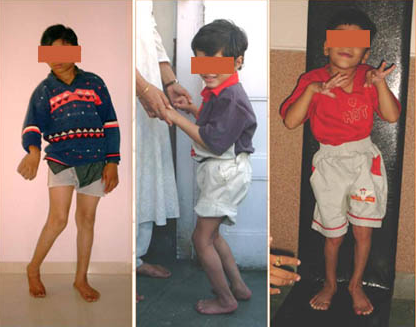
Hemiplegia in children is a neurological condition characterized by weakness or paralysis affecting one side of the body, including the arm and leg. It can affect a child’s movement, balance, walking, hand function and daily activities.
Early diagnosis, appropriate treatment and rehabilitation can significantly improve a child’s functional abilities and quality of life.
What Is Hemiplegia in Children?
Hemiplegia refers to weakness or paralysis on one side of the body (right or left). It occurs when the brain pathways responsible for controlling movement are affected.
Children may have difficulty using one hand, walking normally, maintaining balance or performing everyday activities.
Hemiplegia may be present from birth or develop later during childhood.
Causes of Hemiplegia in Children
Common causes include:
Cerebral Palsy: Brain injury occurring before, during or shortly after birth can cause permanent weakness on one side of the body.
Childhood Stroke: Blockage or bleeding in the brain can cause sudden weakness affecting one side.
Brain Injury: Head trauma can damage areas responsible for movement.
Brain Infection: Encephalitis or other serious infections may affect motor pathways.
Brain Tumors: Certain brain tumors can cause progressive weakness.
Brain Malformations: Conditions such as schizencephaly and other congenital brain abnormalities may cause hemiplegia.
Signs and Symptoms of Hemiplegia
Parents may notice:
One arm or leg is weaker than the other.
The child uses one hand much more frequently.
Delayed crawling, standing or walking.
Walking on toes or dragging one leg.
Stiffness or tightness of muscles on one side.
Difficulty holding objects or writing.
Poor balance and coordination.
Differences in muscle size between both sides.
In infants, early hand preference before 12 months may be a warning sign of unilateral motor difficulty and should be evaluated.
How Is Hemiplegia Diagnosed?
A pediatric neurologist evaluates the child’s developmental history, muscle strength, tone, reflexes, coordination and walking pattern.
Investigations may include:
MRI Brain: Identifies stroke, brain injury, congenital abnormalities or other structural causes.
EEG: If seizures are suspected.
Genetic or metabolic tests: When an underlying genetic or metabolic condition is suspected.
Developmental assessment: Evaluates motor, speech, cognitive and functional abilities.
Treatment of Hemiplegia in Children
Treatment depends on the underlying cause, age of the child and severity of weakness.
A multidisciplinary approach is often required.
1. Physiotherapy
Improves muscle strength, balance, posture, walking and mobility.
2. Occupational Therapy
Helps children improve hand function, coordination and independence in daily activities.
3. Constraint-Induced Movement Therapy (CIMT)
Encourages the use of the weaker hand by temporarily restricting the stronger hand under professional supervision.
4. Speech and Developmental Therapy
Helps children with associated speech, language, learning or developmental difficulties.
5. Management of Muscle Stiffness
Appropriate medications(baclofen, tizanidine, trihexiphenidyl), Botulinum toxin injections, and orthoses may help selected children with spasticity.
6. Treatment of the Underlying Cause
Childhood stroke, seizures, infections and other neurological conditions require appropriate medical management.
When Should Parents Consult a Child Neurologist?
Seek medical evaluation if your child:
Uses one hand much more than the other at an early age.
Has weakness or stiffness on one side.
Has delayed motor milestones.
Walks with an abnormal posture or gait.
Develops sudden weakness of the face, arm or leg.
Sudden onset of one-sided weakness is a medical emergency. Seek immediate hospital assessment because childhood stroke and other serious neurological conditions need urgent treatment.
Can a Child with Hemiplegia Improve?
Yes. Many children with hemiplegia make meaningful progress with early diagnosis, regular rehabilitation and appropriate medical care.
The outcome depends on the underlying brain injury, severity of motor impairment and associated developmental difficulties. Early intervention helps maximize independence and participation in school and everyday life.
Child Neurologist in Kathmandu, Nepal
If your child has weakness of one side of the body, delayed motor development or suspected cerebral palsy, an early neurological assessment is important.
Dr. Asim Shrestha – Child Neurologist
Specialist evaluation and management of childhood neurological conditions, including hemiplegia, cerebral palsy, childhood stroke, epilepsy and developmental disorders. Visit: https://drasimchildneuro.com
Rett syndrome is a rare genetic neurological disorder that primarily affects girls. Children may initially develop normally but gradually lose previously acquired skills, including speech, purposeful hand movements, and walking abilities.
Early diagnosis and appropriate treatment are important for improving the quality of life of affected children.
What Causes Rett Syndrome?
Rett syndrome is most commonly caused by mutations in the MECP2 gene, located on the X chromosome.
This gene plays an important role in normal brain development and neuronal function. Most cases occur due to spontaneous genetic mutations rather than inheritance from parents.
What Are the Symptoms of Rett Syndrome?
Common symptoms include:
Developmental regression or loss of acquired skills.
Loss of purposeful hand movements.
Repetitive hand-wringing or hand-washing movements.
Loss of speech and communication difficulties.
Walking difficulties and poor balance.
Seizures and epilepsy.
Abnormal breathing patterns, including breath-holding and hyperventilation.
Sleep disturbances, constipation, and scoliosis.
Symptoms commonly become noticeable between 6 and 18 months of age.
How Is Rett Syndrome Diagnosed?
Diagnosis involves:
Clinical assessment: Developmental regression and characteristic hand movements.
Genetic testing: MECP2 gene analysis, including sequencing and deletion/duplication testing.
EEG: When seizures are suspected.
MRI brain: To exclude other neurological conditions.
What Is the Treatment for Rett Syndrome?
There is currently no universal cure, but appropriate treatment can improve function and quality of life.
Management includes:
Anti-seizure medications for epilepsy.
Physiotherapy to maintain mobility and prevent contractures.
Occupational therapy for daily activities.
Speech therapy and alternative communication devices.
Nutritional support and feeding management.
Monitoring of scoliosis, sleep, breathing, and gastrointestinal problems.
Trofinetide (Daybue) is an approved treatment for Rett syndrome in the United States for eligible patients aged 2 years and older. It may improve certain symptoms but is not a cure.
Gene therapy and other targeted treatments are currently under investigation.
When Should Parents Consult a Child Neurologist?
Seek neurological evaluation if your child develops:
Loss of previously acquired speech.
Loss of purposeful hand movements.
Repetitive hand-wringing movements.
Developmental regression.
Unexplained seizures.
Difficulty walking or abnormal breathing.
Early diagnosis and multidisciplinary care are essential.
Conclusion
Rett syndrome is a genetic neurodevelopmental disorder most commonly associated with MECP2 gene mutations. Developmental regression, repetitive hand movements, loss of speech, and seizures are important clinical features.
Early diagnosis, genetic testing, rehabilitation, and appropriate medical care can significantly improve the quality of life of affected children.
Seizures in children can be frightening for parents. Many people associate seizures with falling to the ground and shaking of the whole body. However, seizures can present in many different ways. Some children may suddenly stare into space, experience unusual jerking movements, become stiff, or have brief episodes of unresponsiveness.
Understanding the different types of seizures in children helps parents recognize warning signs and seek timely medical attention.
In this article, we explain the common types of childhood seizures, their symptoms, causes, diagnosis, and treatment options.
What Is a Seizure in a Child?
A seizure is a sudden episode of abnormal electrical activity in the brain that temporarily affects a child’s movement, behavior, awareness, or sensations.
Depending on which part of the brain is involved, a seizure may cause:
Sudden jerking of the arms or legs
Stiffening of the body
Brief staring episodes
Sudden loss of awareness
Repeated blinking or lip-smacking
Sudden falls
Unusual sensations or behavior
Not every seizure involves shaking or loss of consciousness.
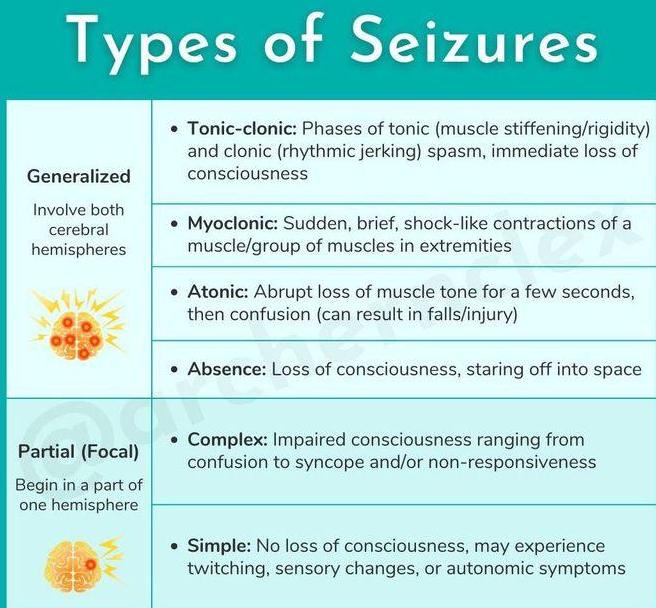
What Are the Main Types of Seizures in Children?
According to the International League Against Epilepsy (ILAE), seizures are broadly classified into three main categories:
Focal-onset seizures
Generalized-onset seizures
Unknown-onset seizures
1. Focal Seizures
Focal seizures begin in one specific area of the brain.
The symptoms depend on which brain region is affected.
Common symptoms include:
Jerking of one arm, leg, or one side of the face
Sudden staring or reduced awareness
Repeated lip-smacking or chewing movements
Unusual sensations or fear
Sudden behavioral changes
Turning of the head or eyes to one side
Focal seizures may occur with preserved awareness or impaired awareness.
Example: A child may suddenly stop playing, stare blankly, repeatedly move their lips, and remain unresponsive for a short period.
2. Generalized Seizures
Generalized seizures involve networks on both sides of the brain from the beginning.
There are several types.
A. Tonic-Clonic Seizures
These are commonly recognized as convulsive seizures.
Symptoms:
Sudden loss of consciousness
Stiffening of the entire body (tonic phase)
Repeated jerking movements of the arms and legs (clonic phase)
Possible tongue biting
Sometimes loss of bladder control
Sleepiness or confusion after the seizure
Most seizures stop spontaneously within a few minutes.
B. Tonic Seizures
Tonic seizures cause sudden stiffening of the body or limbs.
Symptoms:
Sudden body stiffness
Arms and legs become rigid
Head may move backward
Sudden falls may occur
These seizures are commonly associated with certain childhood epilepsy syndromes, including Lennox-Gastaut syndrome.
Movements may involve one or both sides of the body
D. Myoclonic Seizures
Myoclonic seizures cause sudden, brief, shock-like muscle jerks.
Symptoms:
Sudden jerking of the shoulders or arms
Sudden dropping of objects
Brief jerks, especially after waking up
Jerks may occur in clusters
They are seen in conditions such as juvenile myoclonic epilepsy.
E. Absence Seizures
Absence seizures are common in school-aged children.
Parents and teachers may mistake them for daydreaming.
Symptoms:
Sudden staring into space
Sudden interruption of speaking or activity
Brief unresponsiveness
Rapid blinking or subtle mouth movements
Sudden return to normal activity
These episodes usually last a few seconds and may occur many times a day.
F. Atonic Seizures
Atonic seizures cause sudden loss of muscle tone.
Symptoms:
Sudden head dropping
Sudden loss of body posture
Unexpected falls
Brief loss of muscle control
These are sometimes called drop attacks and may result in head injuries.
G. Epileptic Spasms (Infantile Spasms)
Epileptic spasms are an important seizure type occurring mainly in infancy.
They usually begin during the first year of life.
Symptoms:
Sudden bending forward of the head and body
Sudden extension of the arms and legs
Brief repeated flexion or extension movements
Episodes occurring in clusters
Often occurring after waking up
Parents may describe them as repeated head nodding or sudden abdominal crunching movements.
Important: Suspected infantile spasms require urgent assessment by a pediatric neurologist because early diagnosis and treatment can improve developmental outcomes.
3. Unknown-Onset Seizures
Sometimes the beginning of a seizure is not witnessed. In these situations, the seizure may initially be classified as unknown onset.
Further clinical evaluation, video recordings, and EEG findings may help establish the seizure type.
How to Recognize Seizures in Babies and Young Children?
Seizures in infants may look different from seizures in older children.
Parents should watch for:
Repeated sudden head nodding
Unusual eye movements or eye deviation
Repeated stiffening of the arms or legs
Sudden episodes of unresponsiveness
Repeated rhythmic jerking
Clusters of unusual movements, especially after waking up
Sudden episodes of loss of muscle tone
Not all unusual movements are seizures. Some normal infant movements, sleep-related movements, and movement disorders can resemble seizures.
A video recording of the episode can be very helpful for diagnosis.
What Causes Seizures in Children?
Several conditions can cause seizures during childhood.
Common causes include:
Fever-related seizures (febrile seizures)
Genetic epilepsy
Brain infections such as meningitis and encephalitis
Birth-related brain injury or hypoxic-ischemic encephalopathy
Brain malformations
Head injury
Low blood glucose or electrolyte abnormalities
Metabolic and mitochondrial disorders
Brain tumors or other structural brain abnormalities
The underlying cause varies with the child’s age, medical history, and seizure presentation.
How Are Seizures Diagnosed in Children?
A detailed clinical assessment is the most important first step.
A child neurologist may recommend the following investigations:
1. EEG (Electroencephalogram)
EEG records the electrical activity of the brain and helps identify abnormal electrical discharges associated with epilepsy.
2. Video EEG Monitoring
Video EEG records the child’s behavior and brain electrical activity simultaneously. It is particularly useful when the diagnosis is uncertain.
3. MRI Brain
MRI helps identify structural abnormalities, brain malformations, previous brain injuries, and other neurological conditions.
4. Blood Investigations
Blood tests may be required to assess glucose, electrolytes, calcium, and other metabolic abnormalities.
5. Genetic Testing
Genetic testing may be considered in children with early-onset epilepsy, developmental delay, drug-resistant seizures, or suspected genetic epilepsy syndromes.
What Is the Treatment for Seizures in Children?
Treatment depends on the seizure type, underlying cause, age of the child, and epilepsy syndrome.
Available treatment options include:
Anti-seizure medications (ASMs)
Ketogenic diet for selected children with drug-resistant epilepsy
Epilepsy surgery in appropriately selected patients
Vagus nerve stimulation (VNS)
Treatment of underlying metabolic or genetic conditions
Rehabilitation and developmental support when required
Choosing the correct medication is important because some anti-seizure medicines may worsen particular seizure types.
Treatment should always be individualized by a qualified medical professional.
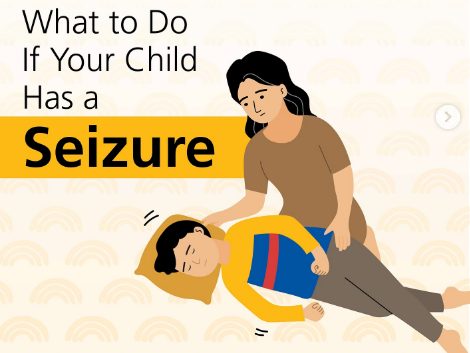
What Should Parents Do During a Seizure?
Knowing seizure first aid can prevent injuries and save lives.
DO:
Stay calm and note the time.
Place the child on a safe, flat surface.
Turn the child gently onto their side when possible.
Remove nearby dangerous objects.
Protect the child’s head.
Stay with the child until recovery.
DO NOT:
Do not put a spoon, finger, or any object inside the mouth.
Do not forcefully hold the child’s arms or legs.
Do not give food, water, or oral medicine during the seizure.
Do not try to stop the jerking movements.
When should parents seek emergency medical care?
Seek emergency help if:
The seizure lasts 5 minutes or longer.
Another seizure starts before the child recovers.
The child has difficulty breathing or does not regain consciousness.
The seizure occurs in water.
The child is seriously injured.
It is the child’s first seizure.
Follow an individualized emergency seizure plan if your child’s neurologist has provided one.
When Should You Consult a Child Neurologist?
You should consult a child neurologist if your child has:
Repeated episodes of staring or unresponsiveness
Unexplained jerking movements
Recurrent episodes of sudden falls
Unusual movements during sleep or after waking
Suspected infantile spasms
Seizures associated with developmental delay
Recurrent seizures despite medication
Early diagnosis and appropriate treatment can help improve seizure control and support a child’s development and quality of life.
Frequently Asked Questions (FAQs)
1. What are the most common types of seizures in children?
Common seizure types include focal seizures, tonic-clonic seizures, absence seizures, myoclonic seizures, tonic seizures, clonic seizures, atonic seizures, and epileptic spasms.
2. Can a child have seizures without shaking?
Yes. Absence seizures and some focal seizures may present as staring, unresponsiveness, unusual behavior, or subtle repetitive movements without generalized shaking.
3. What is the difference between a seizure and epilepsy?
A seizure is an individual episode of abnormal electrical activity in the brain. Epilepsy is a neurological disorder characterized by an enduring tendency to have recurrent unprovoked seizures, meeting accepted diagnostic criteria.
4. Are all seizures in children dangerous?
Not all seizures cause long-term harm. However, prolonged seizures, repeated seizures without recovery, and seizures caused by serious underlying conditions require urgent medical attention.
5. Can childhood epilepsy be cured?
Many children achieve long-term seizure freedom, and some childhood epilepsy syndromes resolve with age. Outcomes depend on the epilepsy syndrome, underlying cause, and response to treatment.
6. Can fever cause seizures in children?
Yes. Febrile seizures can occur in young children, usually between 6 months and 5 years of age, in association with fever. They are different from epilepsy.
Conclusion
Seizures in children can present in many different ways, from brief staring episodes to generalized convulsions and sudden falls. Recognizing the different seizure types is essential for early diagnosis and appropriate treatment.
If your child experiences unusual movements, repeated staring episodes, or unexplained episodes of unresponsiveness, seek evaluation by a child neurologist.
Dr Asim Shrestha – Child Neurologist, Nepal
For consultation and evaluation of childhood seizures, epilepsy, and other neurological conditions, visit:
Seeing your child have a seizure can be frightening. A child may suddenly become unresponsive, stiffen, jerk their arms and legs, or stare blankly for a few seconds. Parents often feel helpless and are unsure what to do.
The good news is that most seizures stop on their own, and simple first-aid measures can help keep your child safe. However, some seizures require immediate emergency medical attention.
In this guide, Dr. Asim Shrestha, Child Neurologist, explains what to do during a seizure, what not to do, and when your child needs urgent medical evaluation.
What Is a Seizure in Children?
A seizure is a temporary episode caused by abnormal electrical activity in the brain. Seizures can affect movement, awareness, behavior, sensations, or consciousness.
Common types of seizures in children include:
Generalized tonic-clonic seizures: The child loses consciousness, becomes stiff, and develops rhythmic jerking movements.
Absence seizures: The child briefly stares into space and may not respond for a few seconds.
Focal seizures: Symptoms may include unusual movements, staring, altered awareness, or abnormal sensations.
Febrile seizures: Seizures associated with fever, usually occurring in young children.
Not every episode of staring, shaking, or falling is an epileptic seizure. A medical assessment helps identify the cause.
Seizure First Aid for Children: 7 Important Steps
1. Stay Calm and Start Timing the Seizure
Look at the time when the seizure begins. Most seizures last a few minutes, but a seizure lasting five minutes or longer is a medical emergency.
If possible, note what happened before, during, and after the episode.
2. Protect Your Child From Injury
Move nearby furniture and sharp objects away.
Protect the child’s head with something soft.
Loosen tight clothing around the neck.
Remove glasses if the child is wearing them.
Do not try to stop the child’s movements by holding their arms or legs.
3. Turn Your Child Onto Their Side When Safe
If possible, gently position the child on their side, especially after the jerking movements stop. This helps keep the airway clear and allows saliva or vomit to drain.
Do not force the child into a position that could cause injury during strong movements.
4. Never Put Anything in the Child’s Mouth
Do not put fingers, spoons, cloth, water, medicine, or any other object into the child’s mouth.
A child cannot swallow their tongue during a seizure. Putting objects in the mouth can cause choking, dental injuries, or injury to the caregiver.
5. Do Not Give Food, Water, or Oral Medicine During a Seizure
Wait until your child is fully awake and able to swallow safely before offering anything by mouth.
If your child has a prescribed seizure-rescue medicine, use it according to the individualized emergency plan provided by their treating doctor.
6. Observe Breathing and Recovery
After the seizure, check whether your child is breathing normally. Keep them on their side if they are drowsy but breathing normally.
Some children feel sleepy, confused, or tired afterward. Stay with your child until they recover.
If the child is unresponsive and not breathing normally, call emergency services, begin CPR, and follow the emergency dispatcher’s instructions. Do not delay CPR to search for a pulse if you are not trained to check one.
7. Record Details for the Doctor
If it is safe, record a short video of the episode for the doctor. Never delay first aid or emergency assistance to record a video.
Note the duration, body movements, eye position, awareness, fever, possible triggers, and recovery time.
When Should You Seek Emergency Care for a Seizure?
Call emergency services immediately if:
The seizure lasts 5 minutes or longer.
Another seizure begins before the child regains consciousness.
The child has difficulty breathing, turns blue, or does not recover normally.
The child is seriously injured during the episode.
The seizure occurs in water.
The child has a first seizure, particularly if it is ongoing, prolonged, or accompanied by breathing problems or other warning signs.
The child has a stiff neck, severe headache, persistent vomiting, or other signs of a serious illness.
The child remains unusually unresponsive or has new weakness after the seizure.
In Nepal, call the locally available emergency ambulance service or arrange urgent transport to the nearest emergency department. Do not drive yourself if doing so would leave the child unattended.
A first seizure that has stopped and the child has fully recovered still requires prompt medical assessment. Seek emergency care for a first seizure, especially if the cause is unclear.
What About Febrile Seizures in Children?
Febrile seizures occur in some young children when they have a fever, commonly between 6 months and 5 years of age.
During a febrile seizure:
Place the child on a safe surface.
Protect the head and time the episode.
Do not restrain the child or put anything in their mouth.
Seek emergency care if the seizure lasts five minutes, breathing is abnormal, or the child does not recover normally.
A first seizure associated with fever should be medically evaluated to identify the cause of the fever and exclude serious conditions, such as meningitis, when clinically indicated.
Most simple febrile seizures do not cause brain damage and do not mean that the child has epilepsy. However, not every seizure with fever is a harmless febrile seizure.
Does Every Seizure Mean Epilepsy?
No. A seizure can occur for several reasons, including fever, low blood glucose, electrolyte disturbances, infections, head injury, or epilepsy.
Epilepsy is a neurological condition characterized by an enduring predisposition to recurrent unprovoked seizures, with certain exceptions under accepted diagnostic criteria.
A child neurologist may recommend:
A detailed history and neurological examination
EEG (electroencephalogram), when indicated
Blood tests, depending on the suspected cause
Brain MRI or other investigations when clinically indicated
Treatment depends on the seizure type, underlying cause, age of the child, and risk of recurrence. Not every child needs long-term antiseizure medication after a single seizure.
How Can Parents Prepare for Future Seizures?
If your child has a history of seizures:
Keep prescribed medicines available and give them as directed.
Ask your doctor whether your child needs a seizure-rescue medication and obtain a written seizure action plan.
Inform teachers and caregivers about seizure first aid.
Maintain adequate sleep and follow any individualized advice about seizure triggers.
Ensure appropriate supervision around swimming pools, baths, heights, and roads.
Attend follow-up appointments with your child’s treating clinician.
Never stop or change antiseizure medication without consulting the treating doctor.
When Should You Consult a Child Neurologist?
Arrange an assessment with a child neurologist if your child has:
A first seizure or repeated episodes of unexplained shaking or unresponsiveness
Recurrent staring spells or episodes of lost awareness
Seizures despite taking prescribed medication
Developmental regression or a change in neurological function
Unusual movements that may represent seizures or another neurological condition
Early evaluation helps identify the cause and develop an appropriate treatment and safety plan.
Seizure Care in Nepal: When to Seek Specialist Help
Parents in Kathmandu and other parts of Nepal may have questions about childhood seizures, febrile seizures, epilepsy diagnosis, EEG, and treatment.
Dr. Asim Shrestha, Child Neurologist, provides information and specialist guidance on neurological conditions affecting children. If your child has experienced a seizure, arrange an appropriate medical evaluation. For a prolonged seizure or another emergency warning sign, seek emergency care rather than waiting for a routine appointment.
1. What should I do first when my child has a seizure?
Stay calm, start timing the seizure, protect your child from nearby hazards, and position them on their side when safe. Never restrain their movements or put anything in their mouth. Call emergency services if the seizure lasts five minutes or longer or if breathing or recovery is abnormal.
2. How long can a seizure last before it becomes an emergency?
A convulsive seizure lasting five minutes or longer is a medical emergency. Emergency assistance is also needed if repeated seizures occur without recovery between them.
3. Should I take my child to the hospital after the first seizure?
Yes. A first seizure should receive prompt medical evaluation, even if it stops spontaneously. Call emergency services immediately if the seizure is prolonged, the child has breathing problems, remains unresponsive, or has other emergency warning signs.
4. Can a seizure cause brain damage?
Most brief seizures do not cause brain damage. Prolonged seizures, serious underlying illnesses, and breathing or oxygen problems can be dangerous and require urgent treatment.
5. Should I put a spoon in my child’s mouth during a seizure?
No. Never put a spoon, fingers, cloth, or other objects in the child’s mouth. A child cannot swallow their tongue, and objects can cause serious injuries or choking.
6. Can fever cause seizures in children?
Yes. Febrile seizures can occur in young children during a fever. A first seizure with fever needs medical assessment because other serious causes of seizures and fever must be considered.
7. Does every child with a seizure need epilepsy medication?
No. Treatment depends on the cause, seizure type, examination findings, investigations, and risk of recurrence. A doctor should decide whether medication is needed.
Conclusion
Knowing seizure first aid can help parents protect their children during a frightening episode. Remember three essential actions: protect the child, time the seizure, and seek emergency care when needed.
Never put anything in the child’s mouth or restrain their movements. A seizure lasting five minutes or longer requires emergency treatment.
For further information about childhood seizures, epilepsy, and neurological care, visit https://drasimchildneuro.com/.
Medical Disclaimer: This article is for educational purposes and does not replace an individual medical assessment. If your child is having a prolonged seizure or experiencing breathing difficulties, seek emergency medical care immediately.
Attention-deficit/hyperactivity disorder (ADHD) is a neurodevelopmental condition that can affect a child’s attention, impulse control, activity level, and daily functioning.
An elimination diet for ADHD in children involves temporarily removing specific foods or ingredients suspected of worsening symptoms and then carefully reintroducing them to see whether there is a consistent change in behavior.
Some children may experience changes in attention, hyperactivity, or irritability in response to particular dietary ingredients. However, food does not cause ADHD, and an elimination diet is not a proven cure for the condition.
Dietary changes may help selected children, but they do not replace evidence-based ADHD treatments.
Can an Elimination Diet Help Children With ADHD?
Research suggests that dietary interventions may benefit some children with ADHD, although the response varies considerably between individuals.
Potential areas of improvement include:
Attention and concentration
Hyperactivity and impulsivity
Irritability and emotional regulation
Sleep and general well-being, when related to specific dietary problems
The evidence for restrictive elimination diets remains limited and inconsistent. Broad elimination diets are not routinely recommended for every child with ADHD.
A balanced diet, adequate sleep, physical activity, behavioral strategies, school support, and appropriate medical treatment remain important parts of ADHD management.
Which Foods Should Be Monitored in Children With ADHD?
Rather than automatically eliminating many foods, parents should identify possible dietary triggers based on the child’s symptoms and eating habits.
1. Artificial food colours
Some studies suggest that certain artificial food colours may increase hyperactive behavior in a subset of children. The effect is generally modest, and not every child is sensitive to these ingredients.
What parents can do: Check packaged food labels and consider reducing brightly coloured processed snacks if a clear relationship with symptoms is suspected.
2. Foods containing added sugar
Sugary drinks, sweets, biscuits, and other highly sweetened foods can contribute to poor overall diet quality. However, evidence that sugar directly causes ADHD or consistently worsens its core symptoms is weak.
What parents can do: Limit sugary drinks and frequent sweets, and encourage regular balanced meals and snacks.
3. Food additives and preservatives
Some children may appear sensitive to particular food additives, but evidence does not support eliminating all preservatives from every child’s diet.
What parents can do: Keep a food and behavior diary before making substantial dietary changes.
4. Foods associated with suspected allergies or intolerances
Milk, wheat, eggs, soy, and other foods may need assessment if a child has symptoms suggesting a food allergy or intolerance.
However, these foods should not routinely be removed simply because a child has ADHD.
Important: Food allergy testing and dietary elimination should be guided by a qualified healthcare professional when an allergy is suspected.
ADHD Elimination Diet Food List
The goal is not to create a long list of forbidden foods. It is to provide a balanced diet while investigating possible individual triggers.
Food group
Foods to include or consider
Protein
Eggs, lentils, beans, chicken, fish, tofu
Whole grains
Oats, whole-wheat roti, brown rice
Fruits
Apples, bananas, oranges, seasonal fruits
Vegetables
Green leafy vegetables, carrots, pumpkin
Healthy fats
Nuts and seeds, if age-appropriate and safe
Calcium-rich foods
Milk, yogurt, or suitable fortified alternatives
For families in Nepal, practical options include dal-bhat-tarkari, seasonal fruits, eggs, beans, and other locally available nutritious foods.
If a particular food is suspected of triggering symptoms, seek professional guidance before removing it, especially if it is an important source of protein, calcium, iron, or other nutrients.
How to Try an Elimination Diet Safely
A structured approach is more useful than randomly removing foods.
Step 1: Record your child’s baseline symptoms
For one to two weeks, record your child’s attention, activity level, sleep, mood, and behavior at home and school. Note any patterns related to meals.
Step 2: Identify a specific suspected trigger
Discuss the diary with your child’s pediatrician or child neurologist. Avoid eliminating multiple food groups without a clear reason.
Step 3: Make a targeted dietary change
If appropriate, temporarily remove the suspected ingredient under professional guidance. The duration depends on the suspected trigger and the clinical plan.
Step 4: Monitor symptoms objectively
Use consistent observations and, where possible, feedback from parents and teachers. Avoid relying on a single unusually good or difficult day.
Step 5: Reintroduce the food when appropriate
Carefully reintroducing the food can help determine whether the symptoms change consistently. Do not attempt home reintroduction if a food allergy could cause a serious reaction.
Step 6: Maintain a nutritionally balanced diet
If a specific food is confirmed to be a trigger, a dietitian can help identify suitable alternatives and prevent nutritional deficiencies.
What Should Children With ADHD Eat?
There is no single ADHD diet that works for every child. A balanced dietary pattern can support general health and development.
Parents should aim to provide:
Regular meals with protein-rich foods
Whole grains and fiber-rich foods
A variety of fruits and vegetables
Adequate water
Healthy sources of fats
Age-appropriate portions and consistent meal routines
Omega-3 fatty acids have been studied in ADHD, but supplementation has shown inconsistent and generally modest benefits. Supplements should not replace established treatments.
Avoid expensive supplements, extreme restrictive diets, or claims that a particular food can cure ADHD.
Common Mistakes Parents Should Avoid
Mistake 1: Removing too many foods at once. This makes it difficult to identify the actual trigger and may lead to nutritional deficiencies.
Mistake 2: Stopping ADHD medication without medical advice. Dietary interventions should not replace prescribed medication or behavioral treatment.
Mistake 3: Assuming sugar causes ADHD. Reducing excess sugar is sensible for general health, but ADHD is a complex neurodevelopmental condition.
Mistake 4: Using unproven food sensitivity tests. Many commercially available tests are not validated for diagnosing dietary triggers of ADHD.
Mistake 5: Continuing a restrictive diet without monitoring growth. Children need sufficient calories, protein, vitamins, and minerals for healthy development.
When Should You Consult a Child Neurologist?
Consider professional assessment if your child has persistent inattention, excessive activity, impulsivity, learning difficulties, or behavioral problems affecting home and school life.
A child neurologist or qualified ADHD clinician can assess symptoms, consider other contributing conditions, discuss evidence-based treatment, and help determine whether a dietary intervention is appropriate.
In Nepal, parents should seek care from a qualified clinician rather than relying on dietary changes alone.
Frequently Asked Questions
Can an elimination diet cure ADHD?
No. There is currently no evidence that an elimination diet cures ADHD. Some children may benefit from targeted dietary changes, but responses vary.
Should every child with ADHD avoid sugar?
No. Reducing excess added sugar is reasonable for general health, but strict sugar elimination is not an established treatment for ADHD.
Should milk and wheat be removed from the ADHD diet?
Not routinely. They should generally be removed only when there is a specific clinical reason, such as a diagnosed allergy, celiac disease, or another relevant condition.
How long does an elimination diet take to work?
The time frame depends on the suspected trigger and the clinical plan. A clinician may recommend a defined trial with symptom monitoring and planned reassessment rather than an indefinite restrictive diet.
Can dietary changes replace ADHD medication?
No. Dietary interventions should be considered alongside established treatments when appropriate, not as a substitute for prescribed medication, behavioral interventions, or school support.
Final Thoughts
An elimination diet for ADHD in children may be worth considering in selected cases, but it should be targeted, time-limited when appropriate, and supervised by a qualified professional.
The most important goal is to identify genuine dietary triggers without compromising nutrition, growth, or quality of life.
For parents in Nepal: If your child has symptoms of ADHD or you suspect that certain foods worsen their behavior, consult a qualified child neurologist for individualized assessment and guidance.
Every child develops at their own pace. Some children walk early, while others take a little longer to speak or develop new skills. However, when a child consistently misses important developmental milestones, it may be a sign of developmental delay.
Recognizing developmental delay in children early is important because timely assessment and intervention can improve communication, movement, learning, social interaction, and everyday functioning.
For parents in Nepal, knowing the warning signs and understanding when to consult a specialist can make a meaningful difference.
What Is Developmental Delay in Children?
Developmental delay occurs when a child does not acquire expected skills within the usual developmental timeframe.
Development is commonly assessed across five areas:
Gross motor skills: Sitting, standing, walking, running, and jumping.
Fine motor skills: Reaching, grasping, drawing, and using objects.
Speech and language: Understanding words, speaking, and communicating needs.
Social and emotional development: Smiling, interacting, sharing attention, and playing with others.
Cognitive development: Learning, problem-solving, remembering, and understanding concepts.
A child may have difficulty in one area or several areas. Significant delays across multiple developmental domains may be described as global developmental delay in younger children.
Developmental delay is not a final explanation for every child’s difficulties. It is a reason to investigate possible causes and identify the support the child needs.
Developmental Delay in Children: Warning Signs by Age
Developmental milestones are useful guides, not rigid deadlines. A child who misses a milestone may need assessment, but a missed milestone alone does not establish a diagnosis.
1. Warning Signs at 3–6 Months
During early infancy, babies gradually develop social engagement, head control, and communication.
Watch for:
Not smiling at people by around 3 months.
Not responding to loud sounds or familiar voices.
Poor head control by around 4 months.
Not making sounds or attempting to interact with caregivers.
Not bringing hands toward the mouth or reaching for nearby objects by around 6 months.
Very limited interaction or difficulty maintaining attention to faces.
When to seek help: Consult your paediatrician if your baby is not gaining expected skills, has poor head control, or does not respond to sounds. Hearing, vision, and neurological assessment may be needed.
2. Warning Signs at 6–9 Months
Babies usually become more active and increasingly interested in people and their surroundings.
Warning signs include:
Difficulty sitting with support or poor head and trunk control.
Not laughing or making vocal sounds.
Limited reaching for toys or objects.
Little interest in interacting with caregivers.
Not turning toward sounds or familiar voices.
When to seek help: Discuss these concerns with a pediatrician, particularly if your baby has difficulty controlling their head or body or is not making progress in several developmental areas.
3. Warning Signs at 9–12 Months
By the end of the first year, many babies sit independently, babble, use gestures, and engage in simple social games.
Warning signs include:
Not sitting independently by around 9 months.
Not babbling, such as making repeated consonant sounds.
Not responding consistently to their name by around 9 months.
Not using gestures, such as waving or reaching to communicate, by around 12 months.
Not looking for objects that disappear from view.
Very limited back-and-forth interaction.
When to seek help: Ask for a developmental assessment if your baby is not sitting independently around 9 months or has limited babbling, gestures, or social responses by 12 months.
4. Warning Signs at 12–18 Months
This is an important period for language, movement, imitation, and social communication.
Warning signs include:
Not walking independently by 18 months.
Not pointing to show interest or request something by around 15 months.
Not trying to say any meaningful words by around 16 months.
Not following simple instructions with gestures or familiar context.
Limited imitation of actions.
Little interest in sharing attention or interacting with others.
When to seek help: A child who is not using meaningful words by 16 months, is not pointing to communicate, or is not walking independently by 18 months should receive an appropriate developmental assessment.
5. Warning Signs at 18–24 Months
Toddlers usually develop more language, pretend play, and independence during this period.
Warning signs include:
Fewer than approximately 50 words or no spontaneous two-word phrases by 24 months.
Not following simple one-step instructions.
Limited pretend play, such as feeding a doll.
Not combining words meaningfully by 24 months.
Limited interest in other children or shared activities.
Persistent difficulty communicating needs.
When to seek help: If your child is not using spontaneous two-word phrases by 24 months, arrange a developmental and speech-language assessment. Hearing assessment is also important when speech is delayed.
6. Warning Signs at 2–3 Years
At this age, children increasingly communicate, play, imitate, and follow everyday instructions.
Watch for:
Speech that is difficult for familiar caregivers to understand.
Difficulty combining words to express needs.
Limited pretend play or imitation.
Difficulty understanding simple questions or instructions.
Very limited interest in social interaction.
Repetitive behaviors or significant distress with changes in routine.
Difficulty using everyday objects or acquiring new skills.
These signs may occur in children with language disorders, autism, hearing difficulties, intellectual developmental disorders, or other developmental conditions.
When to seek help: Consult a developmental specialist if language, play, social communication, or everyday functioning is significantly behind expectations.
7. Warning Signs at 3–4 Years
Preschool children usually develop more complex language, imaginative play, and social skills.
Warning signs include:
Difficulty having a simple back-and-forth conversation.
Limited ability to tell others what they need or what happened.
Loss of previously acquired speech or social skills.
When to seek help: Seek assessment if communication, social interaction, learning, or daily activities are substantially delayed or if your child loses previously acquired abilities.
8. Warning Signs at 4–5 Years
Children approaching school age generally develop more complex communication, early learning, and self-care skills.
Warning signs include:
Difficulty understanding or answering simple questions.
Limited ability to describe familiar events.
Significant difficulty following simple rules or instructions.
Difficulty engaging in imaginative play or interacting with peers.
Delays in drawing, using age-appropriate tools, or managing everyday tasks.
Difficulty acquiring early learning skills compared with peers.
When to seek help: A developmental assessment can identify whether the difficulty relates to language, hearing, cognition, attention, motor skills, autism, or another condition.
Developmental Milestones: Quick Reference Table
Age
Examples of expected skills
Warning signs that need attention
6 months
Reaches for objects, makes sounds, interacts socially
Poor head control, limited sounds or interaction
9 months
Sits without support, babbles, responds to name
Cannot sit independently, little babbling
12 months
Uses gestures, babbles, plays simple social games
No gestures or babbling
15–16 months
Points to communicate, attempts meaningful words
No pointing or no meaningful words by 16 months
18 months
Walks independently, attempts several words
Not walking independently or no meaningful words
24 months
Combines words spontaneously, follows simple instructions
No spontaneous two-word phrases
3 years
Uses short sentences, engages in pretend play
Marked communication or social difficulties
4–5 years
Develops conversation, imaginative play, and self-care
Persistent difficulty communicating, learning, or participating
These are practical developmental guideposts, not diagnostic criteria. Interpret milestones in the context of the child’s overall development, medical history, and opportunities to learn.
What Causes Developmental Delay in Children?
Developmental delay can have many causes, including:
Genetic conditions: Certain chromosome abnormalities and genetic disorders- Down syndrome, Fragile X syndrome, Rett syndrome
Prematurity(37 weeks): Children born early may need adjusted milestone interpretation, especially in the first two years.
Hearing or vision impairment: These can affect communication and learning.
Neurological conditions: Cerebral palsy, epilepsy-related disorders, and other neurological conditions.
Autism spectrum disorder: Differences in social communication, interaction, and behaviour.
Nutritional or medical conditions: Some nutritional deficiencies, thyroid disorders, and other medical problems.
Environmental and psychosocial factors: Limited opportunities for interaction and learning may contribute to developmental difficulties.
Sometimes, the cause is not immediately apparent. A structured assessment helps determine which investigations, if any, are appropriate.
Is Developmental Delay the Same as Autism?
No. Developmental delay and autism are related but different concepts.
Developmental delay
Autism spectrum disorder
Describes slower acquisition of developmental skills
A specific neurodevelopmental condition
May affect one or several developmental areas
Involves persistent social communication differences and restricted or repetitive patterns of behaviour
Can result from many different causes
May occur with or without language or intellectual delay
Requires assessment to identify the child’s needs and possible cause
Requires an assessment of autism-specific diagnostic criteria (MCHAT, ISAA, ADOS-2)
A child can have both autism and developmental delay. A child with delayed speech does not automatically have autism, and a child who speaks fluently can still be autistic.
What Should You Do If You Notice Developmental Delay?
If you are concerned about your child’s development, follow these steps.
Step 1: Discuss your concerns with a doctor
Start with your paediatrician or consult an appropriately trained developmental paediatrician or child neurologist. Explain the skills your child has and has not acquired.
Step 2: Arrange a developmental assessment
Assessment may include a developmental history, physical and neurological examination, observation, and standardized developmental screening or evaluation.
Step 3: Check hearing and vision
Hearing difficulties can contribute to delayed speech. Vision problems can affect interaction, movement, and learning.
Step 4: Consider targeted investigations
Depending on the child’s history and examination, the doctor may recommend genetic testing, thyroid or other laboratory tests, neuroimaging, EEG, or additional specialist assessment. Not every child needs all these tests.
Step 5: Start appropriate intervention early
Do not delay helpful support while waiting for every investigation to be completed. Speech-language therapy, physiotherapy, occupational therapy, developmental intervention, and parent-mediated strategies may be recommended according to the child’s needs.
Why Early Intervention Matters
Early intervention helps children build skills during an important period of development.
Depending on the child’s profile, support may include:
Speech and language therapy: Communication, language comprehension, and expressive language.
Physiotherapy: Gross motor development, balance, strength, and mobility.
Occupational therapy: Fine motor skills, daily living activities, and functional participation.
Developmental and behavioural interventions: Learning, play, communication, and adaptive skills.
Parent coaching: Practical strategies to support development during daily routines.
Educational support: Individualized learning strategies and school accommodations.
There is no single intervention suitable for every child. Goals should be individualized, measurable, and reviewed regularly.
When Should You See a Child Neurologist?
Consider specialist assessment if your child has:
Delayed milestones in multiple developmental areas.
Persistent speech or language delay.
Poor head control, abnormal muscle tone, or difficulty walking.
Unusual movements or suspected seizures.
Significant developmental difficulties with possible neurological features.
Regression, meaning loss of previously acquired skills.
Developmental concerns accompanied by abnormal head growth or other neurological signs.
How Can Parents Support Development at Home?
Parents play an important role in supporting development. You can:
Talk, sing, and read to your child every day.
Respond to your child’s sounds, gestures, and attempts to communicate.
Encourage floor play, movement, and age-appropriate exploration.
Play turn-taking games and imitate your child’s actions.
Offer opportunities to play with other children when appropriate.
Follow your child’s interests and encourage small steps toward new skills.
Attend recommended therapy sessions and practise strategies at home.
Track new skills and discuss concerns with your child’s clinician.
Avoid comparing your child constantly with other children. Focus on your child’s progress and seek help when development does not seem to be progressing as expected.
Frequently Asked Questions
1. What are the first signs of developmental delay in children?
Early signs may include poor head control, limited social interaction, delayed babbling, lack of gestures, difficulty sitting or walking, and delayed speech. The signs depend on the child’s age and the developmental area affected.
2. At what age should I worry about developmental delay?
There is no single age at which every concern becomes significant. For example, not sitting independently by around 9 months, not pointing to communicate by around 15 months, no meaningful words by 16 months, and no spontaneous two-word phrases by 24 months are important reasons to seek assessment.
3. Can developmental delay be treated?
Treatment depends on the cause. Some children catch up in particular areas, while others benefit from long-term support. Early intervention can improve functional skills and participation.
4. Does speech delay always mean autism?
No. Speech delay can occur because of hearing impairment, developmental language disorder, global developmental delay, autism, and other conditions. A comprehensive assessment helps distinguish among these possibilities.
5. Which doctor should I consult for developmental delay in Nepal?
You can begin with a paediatrician or seek an appropriately trained child neurologist or developmental paediatrician. A multidisciplinary team may include psychologists, speech-language therapists, physiotherapists, and occupational therapists.
6. Does every child with developmental delay need an MRI or genetic test?
No. Investigations depend on the child’s history, physical examination, neurological findings, and pattern of delay. A clinician should select tests according to the individual child’s needs.
7. Can a child with developmental delay attend a regular school?
Many children can attend mainstream schools, sometimes with additional support or accommodations. Educational planning should be based on the child’s communication, learning, adaptive skills, and individual needs.
8. Should I wait and see if my child catches up?
If you have persistent concerns, seek assessment rather than relying only on waiting. Early evaluation can identify treatable conditions and help children access intervention sooner.
Conclusion
Developmental delay in children can affect movement, speech, learning, social interaction, or several areas at once. Recognizing warning signs by age helps parents understand when professional assessment may be needed.
If your child is missing important milestones, has persistent communication difficulties, or is losing previously acquired skills, seek medical advice promptly. Early identification, appropriate investigations, and individualized intervention can make a meaningful difference.
Concerned about your child’s development? Visit drasimchildneuro.com to learn more about child neurology and developmental concerns, and contact the practice to ask about assessment availability and referral options.